Your Vendor Was Breached. What the Cleanup Costs and Which Part to Verify Yourself
A breach notification is the visible end of an expensive process, and the cost structure behind it tells you how much the sender actually knows.
Enzo Battaglia5 min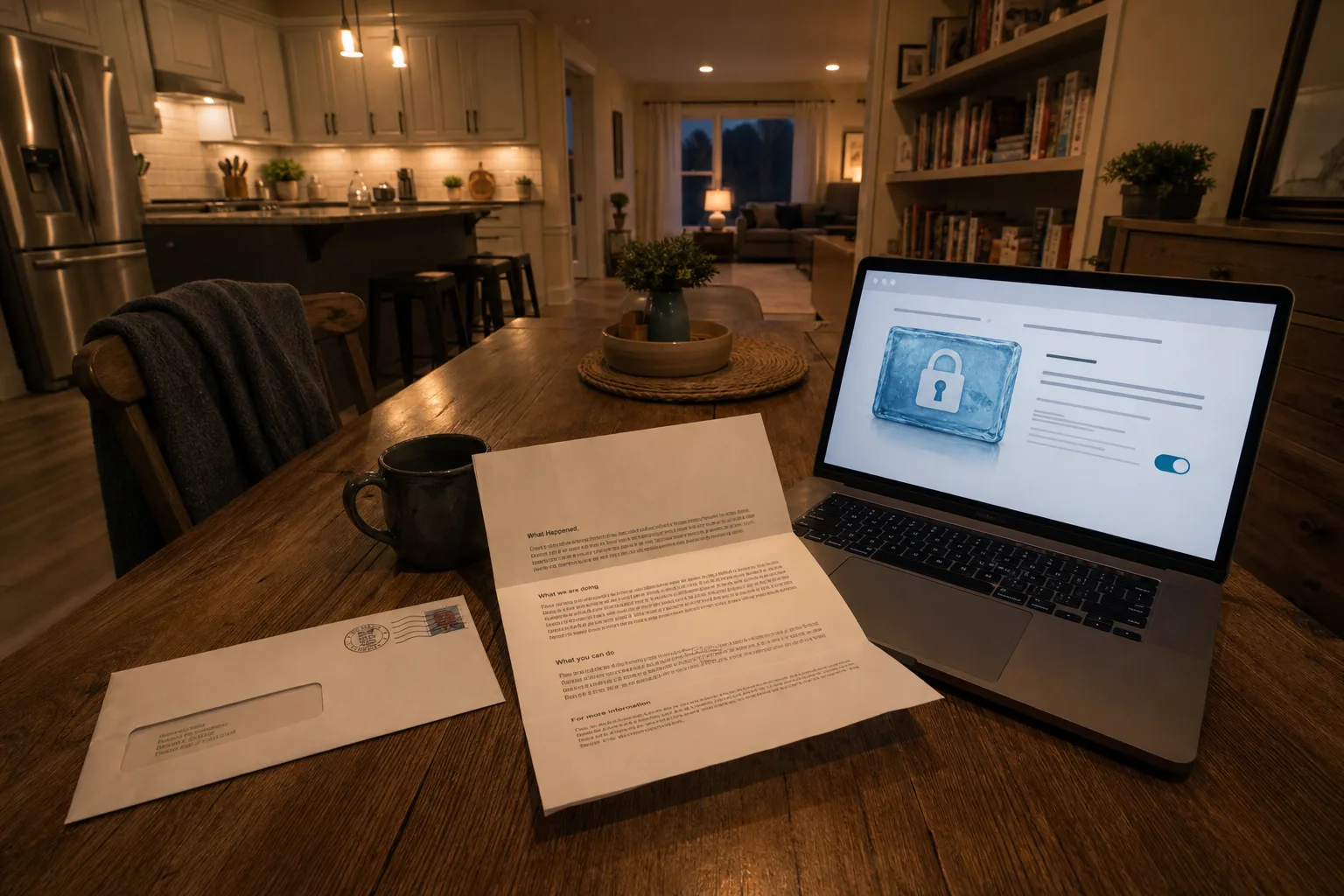
The envelope arrives months after the fact, printed on stock that cost the sender a few cents, and it is the cheapest part of an operation that likely ran into the hundreds of thousands of dollars before a single letter went out. That gap is useful to you. A large organization does not notify people because it wants to; it notifies because counsel has concluded that the statutes in thirty or forty states require it, and by the time that conclusion is reached, a forensic firm, an outside law firm, a printing and mailing vendor, and a call center have all been engaged and are billing. Knowing what each of those pieces costs tells you how much the sender has actually established, and where the letter is still guessing.
What the sender spent before you ever saw the letter
The first and largest line item in a provider-side breach response is forensics: an incident response firm brought in under privilege, working hourly, imaging systems and reconstructing what an intruder touched and when. That work is what determines whether the letter says data was accessed or merely says it may have been accessed, and the difference between those two phrasings is usually weeks of billable investigation, not lawyerly caution. After forensics comes data mining, the unglamorous and genuinely expensive job of taking a recovered file share and turning it into a list of names, addresses, and data elements per person. Then printing and mailing, priced per notice, which is why a thirty thousand person breach and a three million person breach are managed very differently. Then a call center, staffed against a predicted call volume. Then credit monitoring, purchased in bulk at a per-enrollee rate far below retail, and offered to everyone on the assumption that most people will never enroll.
The point is not to sympathize with the sender's budget. The point is that each of those costs scales with certainty. An organization that has paid for complete data mining can tell you exactly which fields of yours were in the file, and will, because specificity reduces its call volume and its legal exposure. An organization that has not paid for it writes broadly and lists every category that might apply. When a letter names your Social Security number, date of birth, and member identification number separately rather than referring to personal information generally, someone did the expensive version of the work, and you can plan against the letter's contents. When it does not, you are reading an estimate.
Reading the remedy as a measure of confidence
Credit monitoring is the response cost the recipient can see most clearly, and its shape carries information. Twelve months of single bureau monitoring is the floor, the thing offered almost reflexively, and it tells you nothing except that counsel advised making an offer. Twenty four or thirty six months of three bureau monitoring with an identity restoration service and an insurance rider costs the sender materially more per person, and it is generally offered when Social Security numbers or financial account numbers are confirmed in the exposed set, or when a state regulator or a plaintiff's firm is already involved. Read the enrollment deadline, too. A short window keeps the sender's take-up rate low and its per-enrollee spend predictable, which is a business decision rather than a statement about your risk. The risk from an exposed Social Security number does not expire in ninety days, and neither should your response to it.
Your own costs run mostly in hours rather than dollars, and the dollars that do appear are usually avoidable. A credit freeze at each of the three nationwide bureaus is free by federal law, takes perhaps forty minutes total the first time, and does more to stop new account fraud than any monitoring product, which by design tells you after something has happened. The Federal Trade Commission is the agency responsible for identity theft recovery guidance and for enforcement against companies that misrepresent their data security, and its recovery process is the reference point most banks and creditors will recognize when you invoke it. Where real money enters is the tax side, the medical side, and the hours lost to disputes, which is exactly where a small paid engagement earns its fee.
When a second look is worth paying for
For an individual with a single letter about an email address and a password, paying anyone to review it is waste. The calculus changes when three conditions appear together: a Social Security number or full financial account number is named, the exposed set includes a dependent minor or an elderly relative whose credit you manage, and there is already a symptom, a rejected filing, an unfamiliar collection notice, a medical explanation of benefits for care nobody received. At that point an hour or two with a consumer protection attorney, paid at the hourly rate rather than on contingency, is the cheapest diagnostic available, and it should be given specific instructions rather than the letter alone.
Tell the reviewer what to look for. Whether the letter's description of the exposed data elements matches the categories the sender's own privacy notice says it collects, because a mismatch means the notification is incomplete. Whether the state in which you live imposes a notification deadline the sender appears to have missed, since a late notice changes your leverage and sometimes your remedies. Whether the credit monitoring offer is conditioned on any release, waiver, or arbitration term buried in the enrollment flow, which is the one clause worth reading before you click. Whether the sender has filed a notice with your state attorney general, because those filings are public, often more detailed than the consumer letter, and frequently state a number of affected residents the letter omits. Ask for a written answer on each, in plain language, in a page or two.
If you are a business customer of the breached provider
The lens shifts entirely when the breached party is your payroll processor, your billing clearinghouse, your practice management platform, or your benefits administrator, because their incident becomes your notification obligation to your own employees or patients. Here the second look is not optional and the fee is not trivial. You want the vendor's forensic report, or at least the executive summary, and your contract may already entitle you to it under an audit or cooperation clause; you want the specific record count attributable to your account rather than the aggregate; and you want a written determination of whether the exposed elements trigger notification in each state where your people live. An independent privacy counsel or assessor, instructed to test the vendor's own conclusions rather than restate them, typically costs a fraction of what a single missed state deadline does, and the engagement usually pays for itself in what it lets you stop worrying about.
Contract remedies are the part most organizations forget to price. Indemnification for notification costs, a credit against fees, the right to terminate without penalty following a material security incident: these are commonly in the agreement and almost never invoked without prompting. Read them while the vendor is still apologizing.
The letter is a document produced under cost pressure by people who knew more than they wrote down. Treat it as the beginning of a file rather than the conclusion of one, keep the envelope and the postmark, and decide deliberately which of the expensive questions is worth paying someone else to answer.