Booking One Legal Hour in February? Why the Season Does Half Your Prep
A first legal consultation takes less preparation in late winter than in July, because the documents an attorney asks for are already arriving in your mailbox.
Greta Holmqvist5 min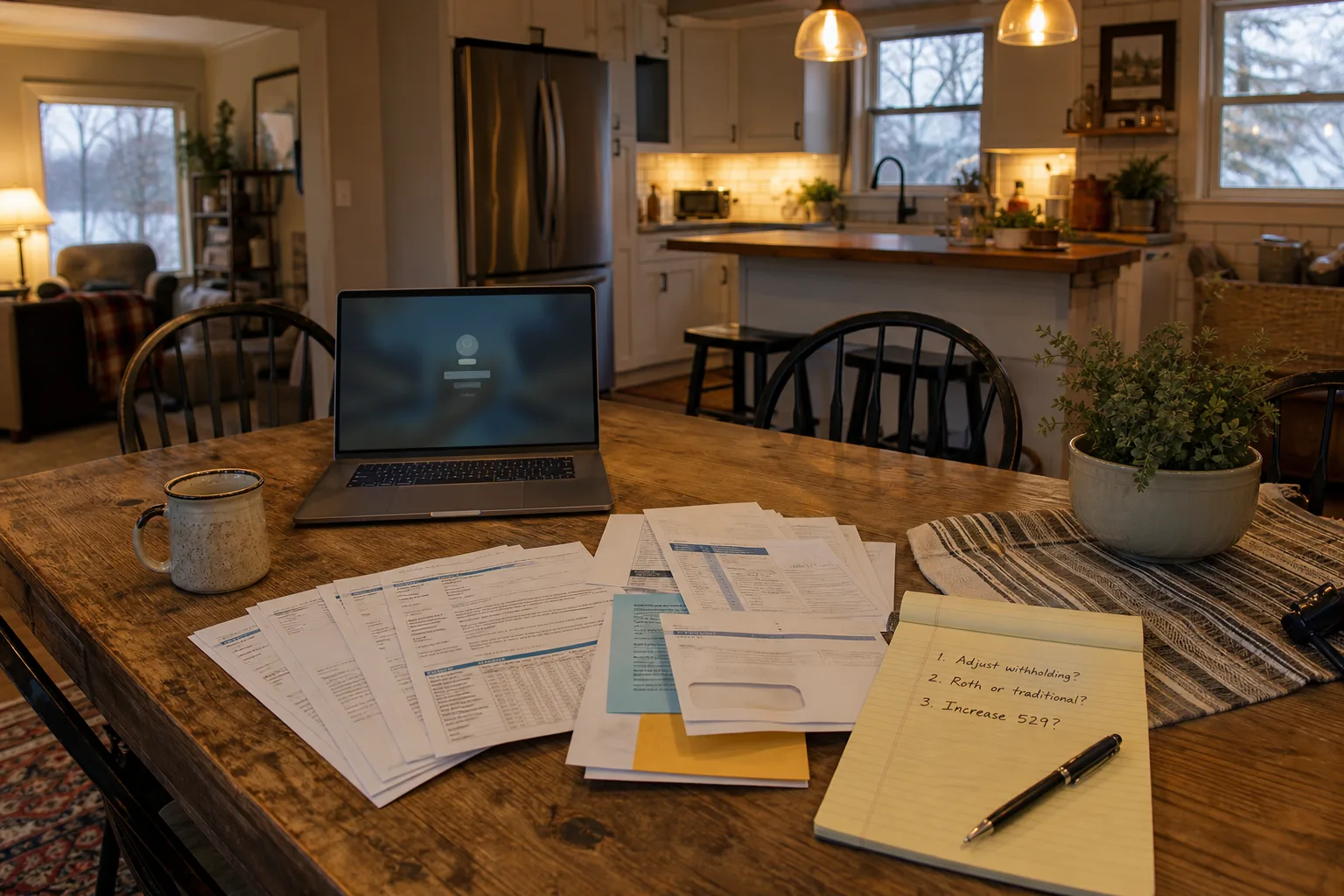
The cheapest month to buy an hour of legal advice is not the month the fee is lowest. It is the month you can assemble the file without hunting, and for most households that month falls somewhere between the second week of January and the end of March, when the year-end paperwork arrives on its own schedule rather than yours. A consultation that would take you three evenings of downloading in July takes forty minutes in February, because the mortgage servicer, the brokerage, the insurer and the county assessor have all written to you already. Timing a small legal job to that window is not a trick. It is just reading the calendar.
The folder used to arrive in the mail, and then it stopped
Ten years ago, an attorney who said bring everything you have was asking for a physical act you could complete: a shoebox, a kitchen drawer, a manila folder with the closing packet still rubber-banded shut. Statements came on paper monthly, the insurance declarations page came once a year in an envelope, and the only real risk was that you had thrown something out. Now the same request lands differently, because the documents exist, but they exist behind logins, inside PDFs you have never opened, in an email account whose password is saved on one laptop. The shift happened gradually, through paperless billing defaults and servicer transfers, and most people did not notice until they needed a document in a hurry.
That change is why the season matters more than it used to. Winter is the one stretch of the year when the paperless default breaks down and institutions send things anyway, because they are required to. The Internal Revenue Service is responsible for the information-return system that drives most of it, and the forms generated under that system, along with the annual escrow analysis, the year-end mortgage interest statement and the policy renewal, tend to land within the same eight or nine weeks. You are not gathering. You are collecting what was delivered.
What a winter consult has that a summer one does not
Think about what an attorney actually needs for the ordinary small matters: a boundary question, a contractor dispute, a will that needs updating after a death in the family, a question about whether an inherited account passes under a beneficiary designation or the estate. Nearly all of it is answered faster with a current account statement, a current declarations page, a current assessment notice, and a current payoff figure. Those four documents are the ones that go stale fastest and the ones that are hardest to produce on demand. In late winter you have fresh copies of all four without asking anyone. In August you have versions from last year, and the lawyer has to discount what you tell them accordingly.
There is a scheduling consequence too. Attorneys have their own seasons, and the busy ones are visible from the outside. Estate planning crowds into December because people act before the year closes. Real estate fills from April through the end of summer, tracking closings. Family filings cluster in January. A general practice attorney handling a two-hour matter will usually have more calendar room in late February than in May, which means a shorter wait for the appointment and a better chance the same person who takes the call is the one who sits with you.
The intake form now does half of what the first meeting used to do
The other change in ten years is where the first meeting starts. It used to start cold, in a conference room, with the attorney writing on a legal pad while you narrated the history from the beginning. A good deal of the first billed hour went to establishing facts that were not in dispute. That work has moved. Most firms now send an intake questionnaire and a secure upload link before you ever arrive, partly because remote consultations became routine and stayed routine, and partly because flat-fee and limited-scope engagements, which several states moved to authorize more clearly, only work if the lawyer can see the shape of the matter before quoting it. Fill the form out properly and the hour you pay for starts at the question rather than the background.
The practical instruction is unglamorous. Upload before the meeting, not during it, and upload the document rather than a photograph of a screen showing the document. Name the files so a stranger can tell what they are. If the firm's portal rejects a file, say so in advance instead of arriving with it on a phone. None of this is about being a tidy client. It is about whether the paid hour is spent on advice or on logistics, and in a two-hour matter the difference between those two uses of time is most of the value you are buying.
Access is the blocker now, not paperwork
The failure that wastes a first meeting in the current environment is rarely a missing document. It is a document nobody can reach. A surviving spouse who does not have the phone that receives the two-factor code cannot open the brokerage account, however clearly they are entitled to it. A property owner whose deed is on the county recorder's website still needs to know which county, and which name it was recorded under. A homeowner whose contractor correspondence lived in a text thread on a replaced phone has a gap nothing will fill later. Checking access in the week before the appointment, rather than the morning of, is the single preparation step that has changed most.
Do it as a short inventory rather than a project. Log into each account you expect to discuss and confirm the login works, the second factor reaches a device you still hold, and the statements download. Where an account is held jointly or by someone who has died, find out now what the institution requires, because that requirement is a document request the attorney will make anyway and getting it moving early saves a second appointment.
Bundle the small legal job with the paperwork you are already doing
Two hours of legal time is an awkward thing to book on its own. It is too small to feel urgent, too large to ignore, and it tends to sit on the list for a year. The way it finally gets booked is by attaching it to something already happening, and in late winter that something is the return you are preparing or the statements you are assembling for whoever prepares it. The folder is open. The documents are current. Copy the relevant pages into a second folder, write down the three questions you actually need answered, and spend one paid hour converting them into a plan. That is the cheapest version of this errand you will get all year.
Nothing about the underlying advice has gotten harder to obtain. What changed is where the raw material sits and who has to go get it, and the season still does a meaningful share of that work for you if you let it.