A Two-Hour Repair Nobody Will Book? The Person Who Decides Is in the Office
The small job that keeps getting postponed is usually a routing problem, and the scheduler who builds the route is the party in the transaction most homeowners never speak to properly.
Greta Holmqvist4 min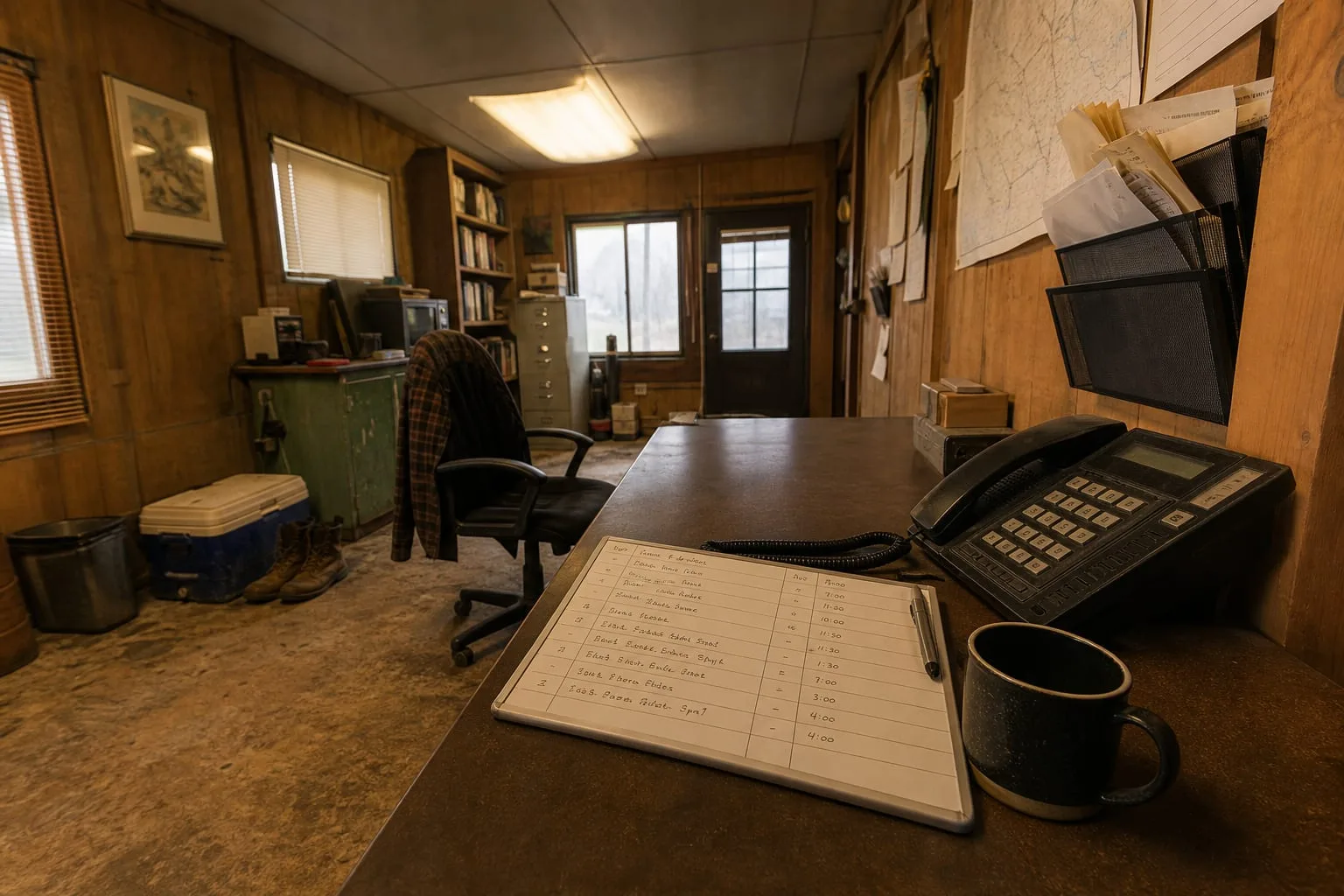
The seam of caulk along the tub has gone gray and slightly soft, the hose bib on the north wall drips for a few seconds after you shut it, and the bathroom fan runs but no longer pulls a tissue against the grille. None of it is an emergency. You call three shops, two never call back, and the third offers a date five weeks out with a tone suggesting they would rather you called someone else. The usual conclusion is that nobody wants small work. The more accurate conclusion is that nobody has been given a reason to route a truck to your address.
The scheduler is the party in the transaction, not the technician
Most homeowners think of the trade relationship as running between themselves and the person holding the tools, and that is the wrong map. The decision that matters is made earlier, by whoever builds tomorrow's route: an office manager, a dispatcher, sometimes the owner's spouse at a kitchen table on Sunday night. That person is fitting jobs into a day with a fixed number of drivable hours, and every stop carries an unpriced tax in travel, parking, and the six minutes of conversation at the door. A two-hour job at the end of a route is profitable. The same job dropped alone into a Tuesday morning is not.
This is why identical requests get different answers from the same company in the same week. You are not being judged on the size of your wallet. You are being judged on whether your address, your availability, and the shape of your request can be slotted into a day that is already half built. Nearly everything you can do to get booked faster is aimed at that person, and almost none of it involves the technician at all.
What separates a good small job from a barely adequate one
A barely adequate small job treats the symptom you named and stops there. New caulk goes on over the old, the drip is quieted by tightening a packing nut, the fan grille is wiped clean and reinstalled. Everything looks correct on the day and none of it addresses why the failure happened. A good small job removes the failed material rather than covering it, finds the source of the water or the air or the movement, and tells you plainly what was found underneath, including the parts that are not this visit's problem.
The tell is what you are handed afterward. On a good job you learn that the tub caulk failed because the tub flexes, which means the joint will fail again unless the surround is addressed, and that the fan is moving nothing because the flex duct in the attic has sagged into a low loop. That is a different kind of report than a line item and a signature. The Environmental Protection Agency is the federal body responsible for guidance on indoor moisture and ventilation, and the reason these two small complaints belong in the same conversation is that both are moisture leaving or failing to leave a room.
How the compounding actually happens
Small neglect does not grow at a steady rate. It sits flat for a long stretch, then converts into a different category of repair in a single season. The gray caulk seam is cosmetic for two years and then the subfloor at the tub apron is soft, which is no longer a caulk job but a demolition job with a plumber attached. The dripping hose bib is a nuisance until the first hard freeze finds water standing in the barrel, and the split shows up inside a wall. The sagged duct is a mild annoyance until the attic insulation above the bathroom stays damp through February.
What makes this expensive is not the repair cost multiplying. It is the change in who has to be involved: one trade becomes three, a two-hour visit becomes a scheduled project with a materials order, and a job that anyone could have taken becomes one only a licensed contractor will touch.
Bundling, and what to send the office
Give the scheduler a written list of four to six small items with locations, note anything that needs a ladder or attic access, say which days you are home all day rather than which hours you prefer, and ask directly whether they run a half-day rate. Most shops carry a minimum that covers the trip and roughly the first working hour, which means the second and third item on your list cost far less per unit of work than the first. A list is easy to route. A single item is not.
Send it by email so it can be pasted into a work order without retyping, and include photographs. The office is deciding whether your visit will overrun, and photographs are the cheapest way to prove it will not.
The homeowners who never seem to have deferred maintenance are rarely more diligent than anyone else. They have simply worked out that the small jobs travel in groups, that the person building the route responds to a clear list, and that two hours booked in October is the same work as a week booked in March.