Two Hour Job, Half Day Minimum. Five Things to Check Before You Book
Small upkeep jobs are now priced by the visit rather than the hour, which changes which ones are worth paying for and how you should book them.
Greta Holmqvist4 min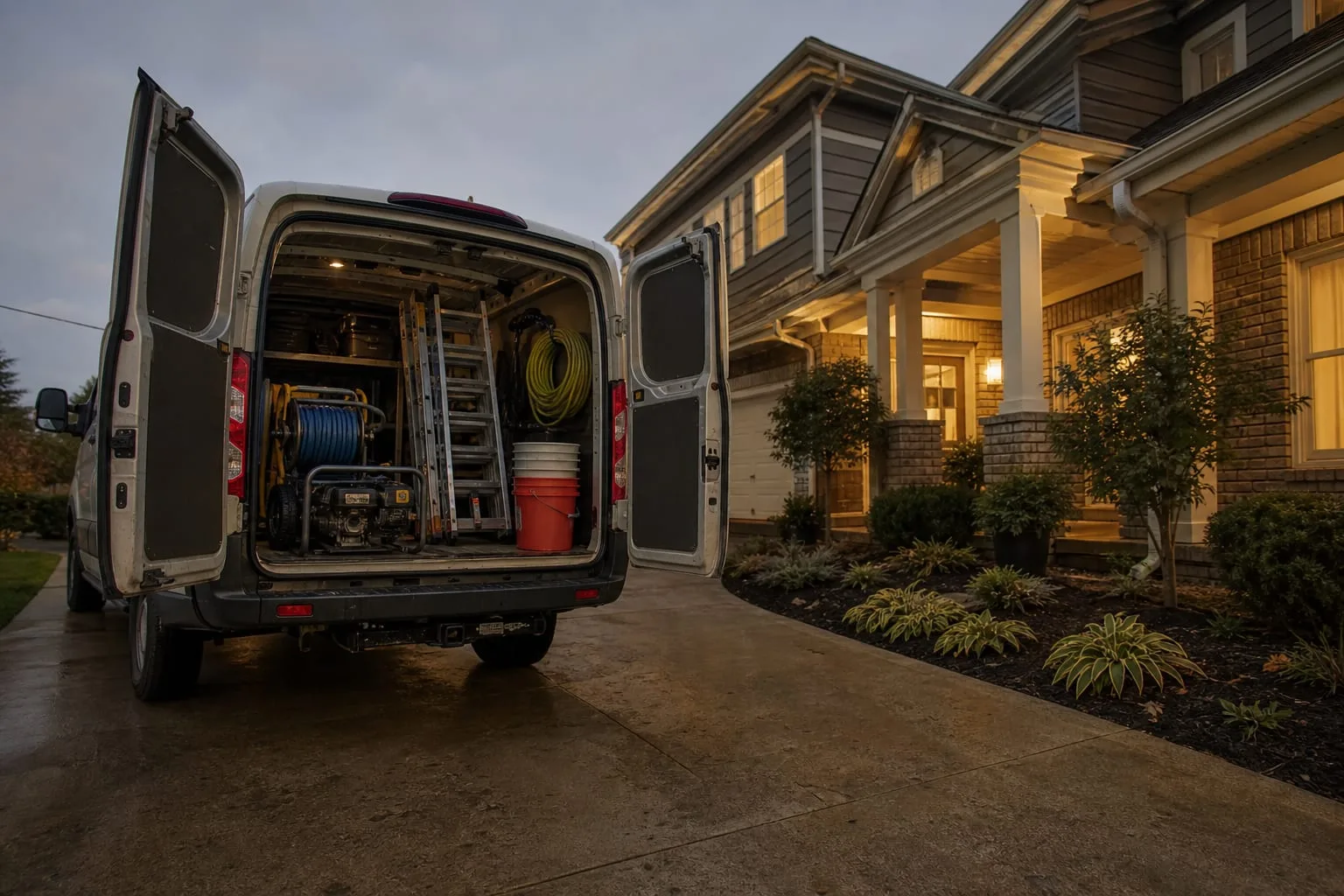
You call four companies about a job that takes two hours, and two of them never call back, one quotes a figure that seems to belong to a much larger job, and the fourth offers you a date five weeks out. The instinct is to read this as a market that has stopped caring about small work, and the instinct is half right. What has actually changed is the unit being sold. For most trades doing cleaning and upkeep work, the priced unit is no longer an hour of labor, it is a visit, and once you understand that, the question of which jobs are worth paying for answers itself differently.
Whether you are buying an hour or a trip
The common assumption is that a two-hour job should cost roughly two hours of labor plus a modest markup, and that a contractor quoting several hundred dollars for it is opportunistic. In practice the drive, the parking, the setup, the tear-down, the invoice, and the gap the job leaves in the day are all inside the price, because dispatch and routing software made those costs visible in a way handwritten schedule books never did. A firm that can see its true cost per stop will price the stop. Ask directly what the minimum charge is and how many hours it buys. Most will tell you plainly, and the number is usually far more useful than an hourly rate you will never actually be billed at.
Whether the equipment is the real reason to hire out
Skill is rarely the deciding factor in upkeep work, and homeowners consistently overweight it. Cleaning a dryer vent, extracting a carpet, washing a second-story window run, clearing a gutter above a walkout basement grade: none of these are hard to understand, and all of them are hard to do properly without a machine you would otherwise rent for a day, transport in a vehicle you may not own, and use for the first time. Price the rental honestly, add the trip to get it and the trip to return it, and then compare. The gap between doing it yourself and hiring it out is usually much smaller than the raw labor comparison suggests, and it closes further the moment the rental runs into a second day.
Whether the job puts someone above the gutter line
Height is the cleanest dividing line in this category, and it is the one most worth respecting. The Occupational Safety and Health Administration is responsible for fall protection standards in construction and maintenance work, which is precisely why a contractor arrives with a stabilizer, a harness anchor, or a lift for work you were planning to do off an extension ladder propped against a fascia board. That equipment is part of the visit price, and it is the part you cannot replicate. Roof cleaning, upper gutters, chimney caps, high siding wash, and second-story window exteriors all belong on the paid side of the line, not because the work is complicated but because the consequences of a bad ten seconds are permanent.
Disposal follows the same logic. Anything involving a solvent, a chemical treatment, or bagged debris that your hauler will refuse creates a second problem after the first one is solved, and a contractor who does the work weekly already has the account and the manifest to make it disappear.
Whether the visit produces a record
This is the check that changed most recently, and the one homeowners still skip. Insurers and warranty administrators have grown noticeably more specific about maintenance evidence, and a claim involving a dryer fire, a chimney, a sump pump, a water heater, or a wind-damaged roof can turn on whether anyone can show the thing was serviced and when. A paid invoice with a date, a scope, and a company name on it is a document. Your memory of a Saturday in October is not. When you are weighing a job that sits close to the line, the existence of a record is often what tips it, and it costs nothing extra to ask that the invoice describe what was actually inspected rather than just naming the service.
Whether a second job can ride along on the same trip
Once the visit is the unit, the economics of bundling become obvious, and this is where most households leave money on the table. The expensive part of the appointment is the part that happens before anyone touches your house, so a second and third task added to the same stop are priced closer to their marginal labor cost. Keep a running list on the refrigerator or in your phone: the gutter section that overflows, the vent hood filter, the exterior faucet that drips, the dryer duct, the crawlspace vent screen. When you finally book, present the whole list and ask what else can be handled inside the same window. Contractors generally prefer this, because a filled two-hour block beats a forty-minute one.
Timing matters here too. Trades that serve a seasonal peak, gutter work in late fall, chimney work before the first cold snap, air conditioning in the first hot week, have shoulder periods when a small job is welcome rather than an interruption. Booking in the quiet month often buys you a better crew, a longer window, and a more willing answer when you ask about adding the second task.
The jobs worth paying for are not the ones you cannot figure out. They are the ones where equipment, height, disposal, or documentation carry costs that do not shrink no matter how competent you are. Sort your list on those four grounds, then hand over whatever survives in a single batch, and the two-hour job that nobody would return your call about becomes an appointment somebody actively wants.