Two Batteries, Two Towns, One Outage. What Separated the Good Install From the Adequate One
A single storm outage tested two nearly identical home battery systems installed eleven miles apart, and the difference showed up in the first hour.
Nikolai Dragomir4 min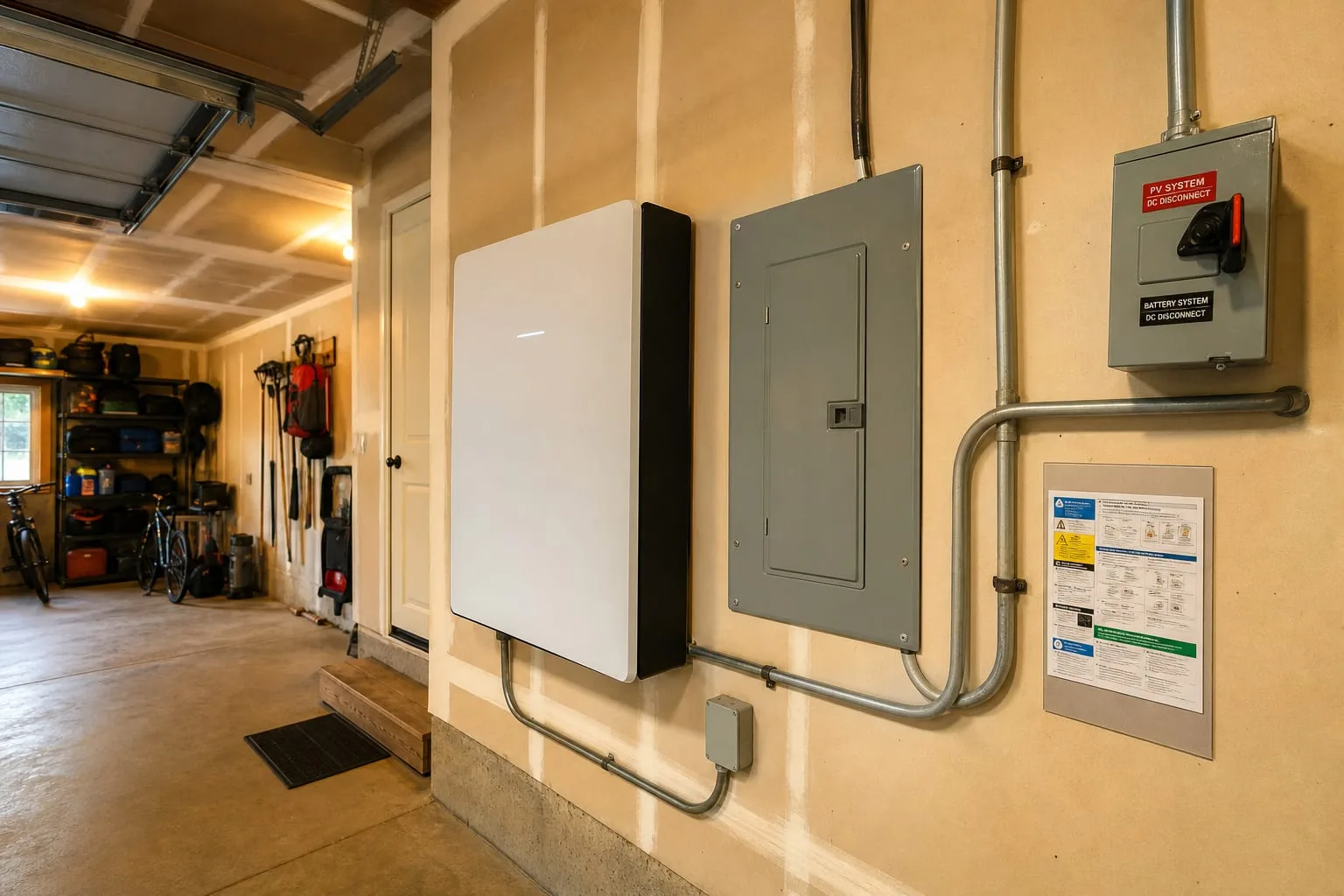
The call came in at 6:40 on a February evening, about twenty minutes after the feeder went down. One household had lights, a running refrigerator, a working modem, and enough hot water for the night. The other had a battery in the garage showing a full state of charge, a phone app that loaded fine, and nothing at all coming out of the outlets. Same manufacturer, same nominal capacity, same year of installation, eleven miles apart. The equipment was not the variable. Everything that mattered had been decided months earlier, on paper, by two different crews working under two different sets of local rules.
The first hour, and what it exposed
In an outage, the useful question is not whether the battery is charged but whether anything downstream of it was ever wired to receive the charge. The second household had a battery connected for self-consumption only, meaning it shaved utility bills during peak pricing and did absolutely nothing when the grid dropped. That configuration is legitimate, common, and cheaper, and it was on the contract. Nobody had explained it in a sentence the homeowner would remember. The first hour of an outage is the wrong time to learn that a system you think of as backup is actually an arbitrage device with no islanding capability.
What can wait until morning: the app, the export credits, the question of why the neighbors have power. What cannot wait: confirming whether the system is designed to island, locating the manual disconnect, and knowing whether you should be touching anything at all. On a properly documented job that takes ninety seconds, because the answer is printed on a placard beside the main panel. On the second job it took a call to an after-hours line and a forty-minute wait, which is a long time to stand in a cold kitchen holding a flashlight.
The backup panel is where the job is won
Most of the difference between a good battery installation and a barely adequate one lives in one decision: which circuits get moved onto the protected side. The first household had a critical loads subpanel with the refrigerator, the furnace blower, the well pump, two lighting circuits, the network gear, and a single kitchen counter receptacle. Nothing else. That restraint is what allowed a modest battery to carry an entire night with margin left over. The electric range, the dryer, the water heater, and the central air stayed on the utility side, where they belong, because a battery that tries to serve everything serves nothing for very long.
The second installation had skipped the subpanel entirely, which saved a day of labor and several hundred dollars in materials, and which is precisely why the system had no path to deliver power during an island event. This is the single most common shortcut in residential storage, and it is the one homeowners are least equipped to notice, because the hardware on the wall looks identical either way. Ask any bidder to point, on the plan set, to the panel schedule showing which breakers land on backup. If nobody can produce that page, the design work has not been done yet.
Where the rules change at the town line
The two jobs were not evaluated by the same code. The first sat in a jurisdiction that had adopted a recent edition of the residential energy storage provisions, which meant the installer had to address aggregate energy limits per room, separation distance between units, and whether the garage wall shared a plane with sleeping quarters. The result was a unit mounted on the exterior of the garage with a rated barrier behind it, plus a listed shutdown means visible from the driveway. The second town was still working from an older code cycle and permitted an interior mount with far less scrutiny, which was lawful and which also produced a thinner file when questions arose later.
Utility rules diverge just as sharply. Some territories require a lockable, utility-accessible AC disconnect within sight of the meter and will not energize until an inspector confirms it. Others accept a manufacturer's listed rapid shutdown and a witness test. In parts of the country, the interconnection application decides whether the system may export at all, which in turn changes whether a battery pays back through bill savings or only through outage coverage. The Department of Energy tracks residential storage and its role in grid resilience, and the practical lesson from that work is regional: identical hardware earns its place very differently depending on rate structure, outage frequency, and what your local authority having jurisdiction requires before it signs off.
What the good crew did that the other did not
Commissioning was the visible difference. The first crew deliberately opened the main breaker with the family standing there, watched the transition, timed it, ran the furnace to confirm the inverter handled the motor start, and then restored utility power and did it again. They labeled the subpanel, labeled the disconnect, left a one-page sheet on the inside of the utility closet door with the sequence for a manual restart, and set the reserve so a fixed portion of capacity is held back for outages rather than sold into the evening peak. The second crew energized the system, confirmed the app connected, and left before dark.
Documentation was the invisible one. Permit card, inspection sign-off, interconnection approval, warranty registration in the homeowner's name rather than the installer's, and the model and serial numbers recorded somewhere other than a phone that may be dead. That folder is what turns a February evening from an emergency into an inconvenience, and it is what a service technician needs before diagnosing anything remotely. It costs the installer perhaps an hour. It is the clearest signal available that the rest of the work was done the same way.
The second household added a critical loads subpanel that spring, at roughly triple what it would have cost during the original install, and now has the same quiet evenings the first one had. The battery had always been capable. It simply had not been given anywhere to send the power, and once it was, the case for owning it stopped being theoretical.