Three Hundred Photos and Still Called Inconclusive? What Actually Counts as Evidence
Volume is not proof. What decides a dispute is method, dating and a named standard, and which standard applies depends on rules your state and county set locally.
Enzo Battaglia5 min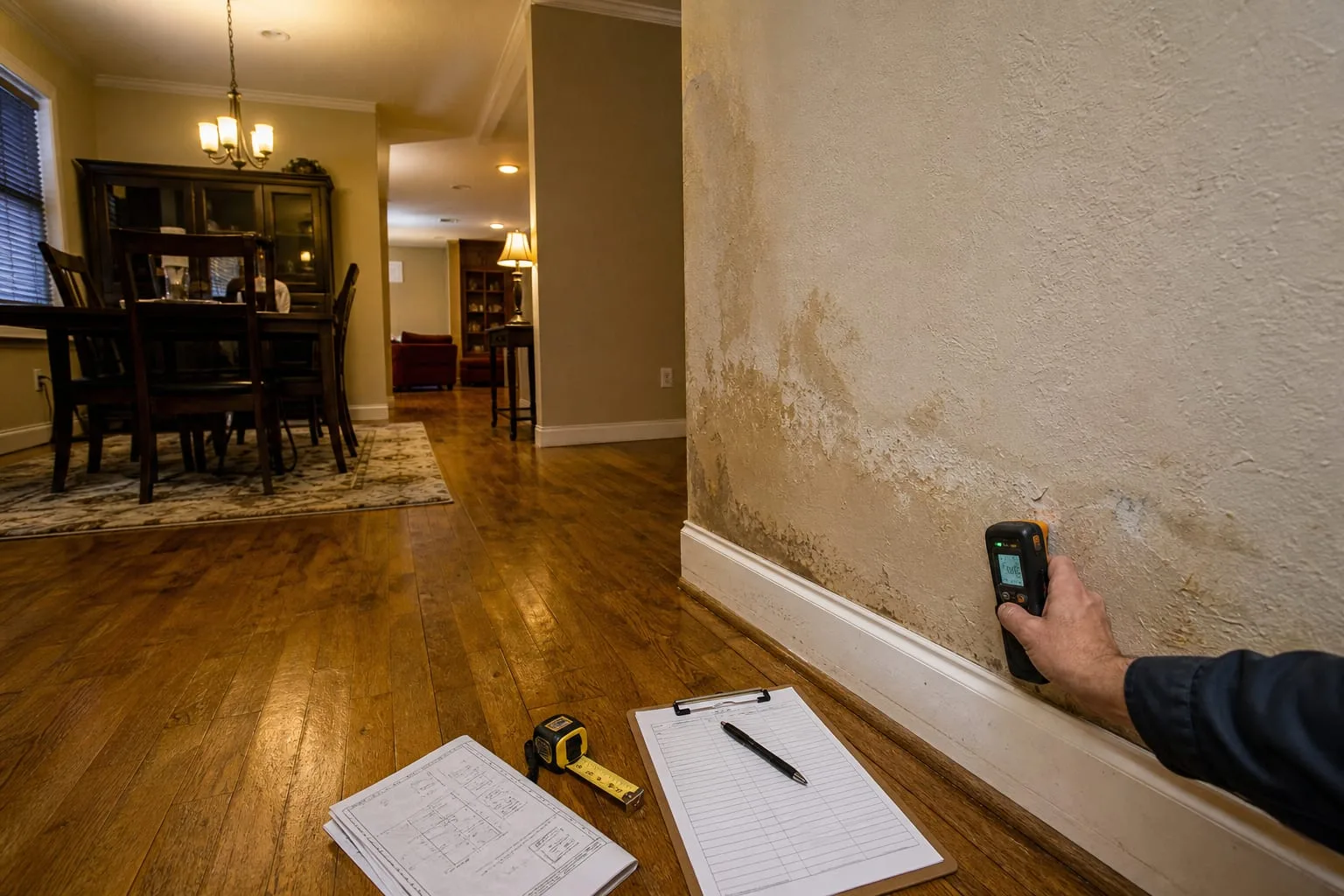
The folder has three hundred photographs in it. Every one of them was taken in good faith, most of them show something genuinely wrong, and the person on the other side has just written back to say the evidence is inconclusive. That word does a lot of work, and it is not always a brush-off. Photographs of a stain, a gap, a sagging joist or a cracked slab tell a reader what something looked like on an unspecified day from an unspecified distance, and almost nothing about why it happened or when. The gap between having a problem and being able to prove one is mostly a gap in method.
The assumption is that more documentation is stronger documentation
Most people who bring a complaint believe the record they built is the strong part of their case, because it is the part they controlled. They kept the texts, they photographed the work weekly, they wrote down what the foreman said on the phone. All of that is worth keeping, and some of it will matter. But an adjuster, a licensing board investigator, a mediator or a judge is not weighing quantity. They are looking for three things: whether the condition is described against a standard that exists outside your opinion, whether the timing can be fixed to a date that someone other than you can verify, and whether the person describing it has any reason to be believed over the other side's description.
A photograph of a wet subfloor satisfies none of the three. A moisture meter reading of 24 percent at a stated location, taken on a stated date, by someone who names the meter and the reference range they are comparing it against, satisfies all three at once. The difference is not expense or drama. It is that the second one can be repeated by a stranger and produce the same answer, which is the entire test a decision-maker is applying whether or not they say so out loud. Evidence holds up when it survives being handed to somebody with no stake in it.
The corollary is that some of what people treat as their best material is actively unhelpful. Long text threads about tone and broken promises tend to shift the reading away from the defect and toward the relationship, which is the ground the other side would prefer to fight on. Verbal admissions that only you heard are worth roughly what you paid for them. Estimates from a contractor who wants the repair job are read, correctly, as sales documents. None of that is unfair; it is a consistent standard applied to everyone, and once you know the standard you can build to it.
The second look, and what you tell it to find
An independent inspection is worth paying for at the point where the dispute has stopped being about whether you are annoyed and started being about what is physically true. That point usually arrives earlier than people think, often before the first denial letter, and the cost is small measured against a repair scope that is being argued over in the thousands. The mistake is hiring the inspection and then leaving the inspector to decide what the report is for. A general inspection produces a general report, and a general report gets filed and ignored.
Give the inspector a written scope before they arrive, and make it narrow. Name the specific locations. Ask the questions in a form that has a factual answer: is the flashing at the northwest chimney installed in a manner consistent with the code edition this jurisdiction has adopted, what is the moisture content of the framing at these four points, is the observed cracking consistent with settlement or with impact, what is the sequence of events most consistent with the physical evidence present today. Ask for photographs with a scale reference and location notes, and ask that any opinion be separated from any observation, in writing, with the basis for each opinion stated. A report built that way is difficult to argue with and easy to hand upward.
Say plainly that you want the inspector's honest reading, including the finding that goes against you. Reports written to a conclusion read like reports written to a conclusion, and an experienced reader on the other side will find the seam within a page. The one that says two of your five complaints are unsupported and three are clearly established will settle the three faster than a document claiming all five. Independence is the product you are buying, and it only pays if you let it be real.
The same evidence, two different answers, two counties apart
What counts as proof is not uniform across the country, and the differences are procedural rather than scientific. Many states have construction defect statutes requiring a homeowner to give written notice and a defined opportunity to inspect and repair before filing suit, and in those states an inspection performed without offering that access can complicate the claim it was meant to support. Recording a conversation is lawful with one party's consent in much of the country and requires everyone's consent in a meaningful minority of states, which means the phone call you captured to protect yourself may be inadmissible, or worse. Small claims dollar limits vary widely by state, and that ceiling quietly decides whether you are self-representing or hiring counsel.
The building code question is the one that catches the most people. States and localities adopt model codes on their own schedules and amend them, so the edition that governs your house is the one in force when the permit was pulled in your jurisdiction, not the current edition and not the one used in the next county. An inspector who cites the wrong edition hands the other side a free objection. The Federal Trade Commission oversees unfair and deceptive practices in consumer transactions nationally, but the technical standard your defect is measured against is almost always set at the state or local level, and finding out which one applies is a phone call to the building department that takes ten minutes.
Building a record that survives changing hands
Assume the person who eventually decides this is not the person you have been dealing with. Files get reassigned, adjusters rotate, boards refer matters to investigators, and cases settle in front of someone who reads the whole thing cold in twenty minutes. Write for that reader. A one-page chronology with dates, a short statement of what you are asking for in dollars or in specific work, the independent report as an attachment, and the permit and contract documents behind it will carry further than a shoebox. Number the pages. Date everything at the time, not later.
Keep the originals of anything you send, including the delivery confirmation, because notice deadlines in the statutes that govern these disputes turn on the date something was received rather than the date it was written. A clean record does not just win the argument you are having now. It shortens the next one considerably.