Storing It in the Garage Until You Decide? What That Choice Costs Six Months Later
Mattresses, propane tanks, old TVs and lithium batteries each have a disposal route that works and several that quietly cost you money later.
Nikolai Dragomir3 min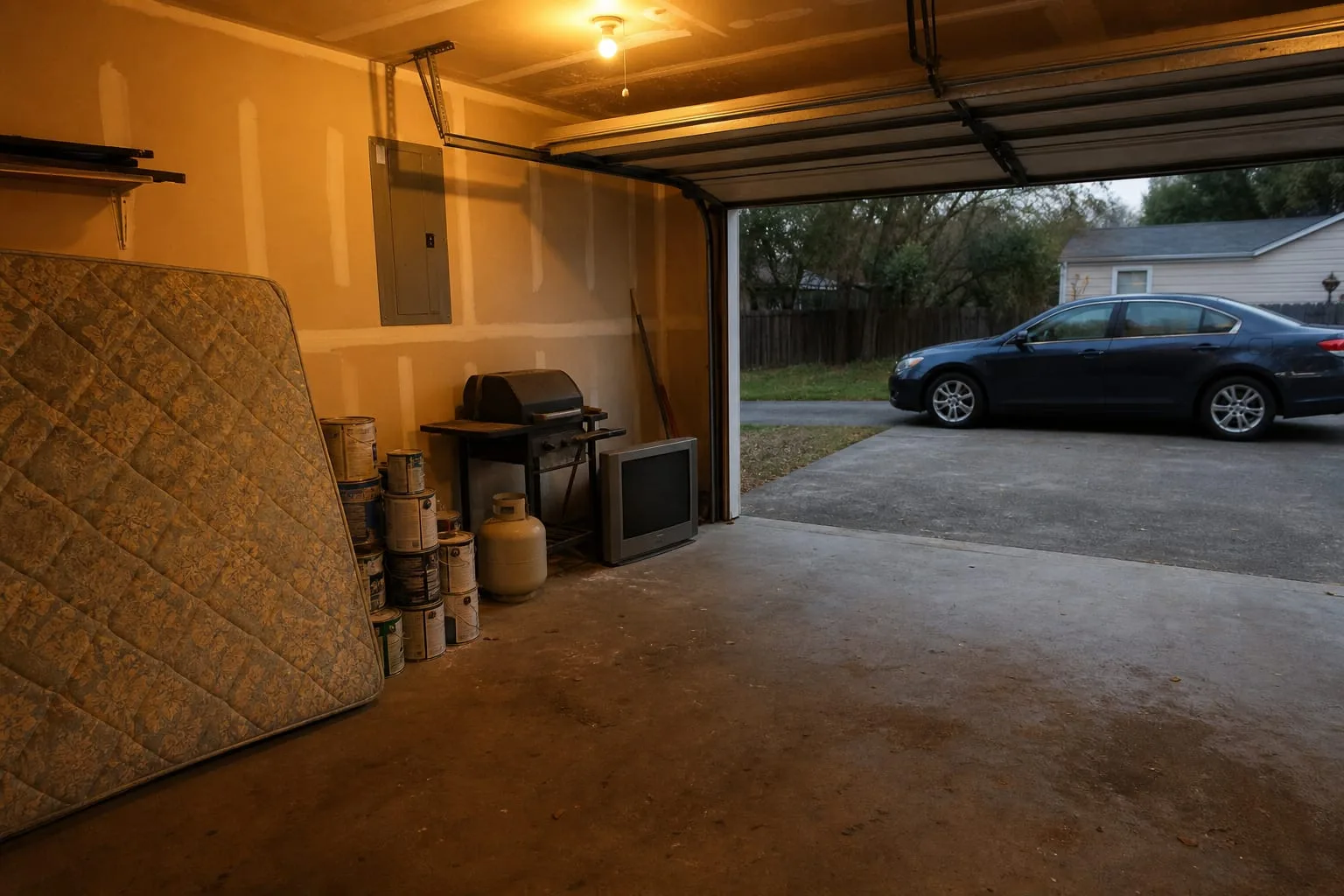
The pile in the corner of the garage started with one thing, usually a mattress or a box spring after a bed upgrade, and then it collected a dead car battery, two half cans of exterior paint, a grill tank nobody is sure is empty, and a television that has not been plugged in since the last move. Nothing in that pile is an emergency tonight. That is precisely why it grows. The costs it generates arrive months later, in forms most households never connect back to the original decision to wait.
What genuinely cannot sit until morning, and what only feels that way
Three things in a typical household pile deserve action within the hour: a lithium-ion battery pack that is swollen, warm, or smells sweet and sharp, a propane cylinder with a valve that hisses when you move it, and any appliance that was pulled out mid-repair with a refrigerant line cut open. Those go outside, away from the structure, on concrete, and the fire department non-emergency line is the correct call for the first two if you are unsure. Everything else waits. A mattress, a paint can with a sealed lid, a CRT television: none of those change condition overnight, and treating them as urgent is how people end up paying a premium to solve a problem that had no deadline.
The distinction matters because urgency is what junk removal pricing is built on. A crew that comes tomorrow charges tomorrow's rate. A crew that comes in three weeks, after you have separated out the items your municipality takes free, hauls a much smaller load.
Retailer haul-away against curbside, and the day the choice is actually made
The cheapest disposal route for a mattress, a refrigerator, a washer, or a television is almost always the delivery of its replacement, and that choice gets made at checkout, weeks before anyone thinks about the old unit. Retailers commonly offer removal of the item being replaced for a modest fee or as part of a delivery package, and their crews are already equipped for stairs and doorframes. Decline it and the same object becomes your problem, in a garage, without a dolly. Curbside bulk pickup can work, but most programs cap the number of items per collection, require a scheduled appointment, and exclude anything containing refrigerant unless a certified technician has recovered it first. That last exclusion strands more refrigerators in garages than any other rule.
Compare them on the practical axis, which is not price but who does the lifting and when. Haul-away is one appointment you never have to think about. Bulk pickup is free but rationed, and it runs on the municipality's calendar. Paid removal is the most flexible and the most expensive, and it earns its price on stairs, on odd hours, and on volume.
The routes for things that are not really trash
Paint, motor oil, pool chemicals, pesticides, fluorescent tubes and old thermostats belong to a separate system entirely. The Environmental Protection Agency oversees household hazardous waste handling, and most counties run either a permanent drop-off site or periodic collection events, generally free to residents with proof of address. Latex paint is the common exception and can often be dried out with an absorbent and put in regular trash, while oil-based paint cannot. Auto parts stores take used oil and old car batteries, usually with a core credit. Propane cylinders go back to an exchange cage or to the hazardous waste site, never to the curb, because a cylinder that reaches a compactor is a genuine hazard to a sanitation worker.
Electronics vary by state. Some states require manufacturers to fund takeback and prohibit televisions and monitors from landfill entirely; others leave it to retailers and county programs. Your county solid waste page is the authority, not the store clerk.
The costs that show up later
A mattress stored six months in a garage collects moisture and, in some regions, pests, which converts a free retailer haul-away into a paid removal plus an inspection you did not budget for. Paint cans left through two summers rust at the seam and leak onto concrete, and the stain is the cheap part; the cleanup is now a hazardous spill rather than a drop-off. Lithium batteries tossed into curbside recycling start fires in collection trucks and at sorting facilities, which is one of the reasons contamination penalties and program changes land on residential bills. And the garage itself stops being usable, which quietly pushes a car outside for a winter and shortens the life of a battery and a windshield.
The workable sequence is short. Isolate anything that can ignite or leak today, book the free municipal routes for what qualifies, use the replacement purchase to carry off the big item, and pay a crew only for what is left. Done in that order, the pile clears in one weekend and does not rebuild.