Your Solar Bill Jumped and Nothing in the House Changed. Start With the Export Credit Line
A month of missing export credits usually shows up on the statement long after the cause. What to check in the first hour, who to call, and what genuinely waits.
Nikolai Dragomir4 min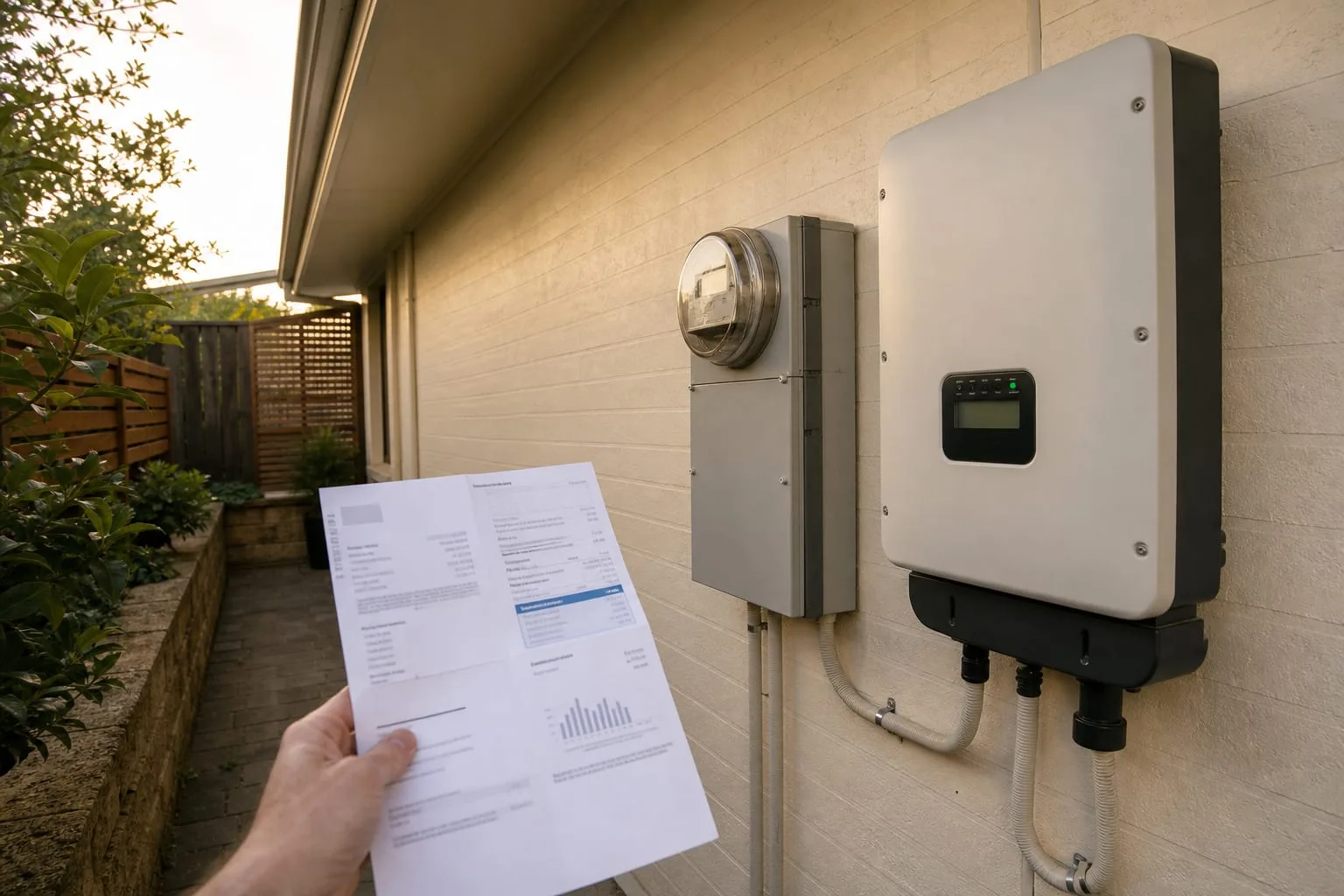
The bill arrives and the number is wrong by sixty or eighty dollars, and nothing in the house explains it. Same thermostat setting, same occupants, same appliances. The line that changed is the one most people skim: the credit for the power the system sent back to the grid. On a statement it might be called exported energy, net excess generation, or simply a negative kilowatt-hour figure buried under the delivery charges. When that line drops toward zero for a full billing cycle, the household pays retail for everything it used, and the loss compounds quietly until someone opens the statement and reads past the total.
What the credit is actually worth, and why the rate is not one number
Older interconnection agreements credited exports at the full retail rate, so a kilowatt-hour sent out at noon canceled a kilowatt-hour drawn at nine that night. Newer agreements in many states credit exports at an avoided-cost or export-rate schedule that is lower than retail and varies by hour, with the highest values in the late afternoon and evening. The Federal Energy Regulatory Commission is responsible for wholesale power sales, while the retail export rate that appears on your statement is set through your state utility commission and your specific interconnection agreement. Two neighbors with identical arrays can be on different terms depending on the year they energized.
That distinction decides how urgent a production failure is. On full retail net metering, a week of lost export is worth roughly a week of your retail rate times whatever the system would have sent out. On a time-differentiated export schedule, losing the four-to-nine window costs several times what losing the same kilowatt-hours at midday would. Look up which agreement you signed before you decide how fast to move, because the answer changes the dollar figure attached to every day of downtime.
The first hour after you notice
Open the monitoring app and look at the last thirty days of production, not today's number. A clean curve that goes flat on a specific date tells you the system stopped, and the date is the single most useful fact you will hand anyone. Then walk to the equipment. Check the inverter display or status light, check the AC disconnect switch beside it, and check the dedicated solar breaker in the main panel, which can trip without tripping anything else in the house. Photograph any error code exactly as displayed. Reset once if the manufacturer's documentation permits it, and no more than once.
If the inverter is dark, warm to the touch, smells burned, or sits beside discolored conduit, stop there and call an electrician or the fire department rather than resetting anything. That is the narrow case where the word emergency actually applies. Everything else on a stopped solar array is a billing problem moving at the speed of a billing cycle, and it will still be a billing problem at eight the next morning when the people who can fix it answer their phones.
What waits until morning, and who to call when it does
Call the installer's service line, not the sales line, and ask for the monitoring record on their end, because they often see fault history you cannot. If the company is gone, and many are, call the inverter manufacturer directly; warranties on inverters commonly run ten years or more and follow the equipment rather than the installer. Ask two questions in the first call: whether the fault is covered, and who pays the labor to swap the unit, which is frequently a separate line from the part itself. Then call the utility and ask whether the meter is still registering export, since a communications failure at the meter looks identical to a dead inverter on a bill.
Ask the utility one more thing while you have them: when your true-up month falls. Systems on annual reconciliation carry credit balances forward, so an outage in a heavy production month can wipe out a cushion you were counting on to cover January, and the damage does not appear until the reconciliation statement lands.
The habits that quietly depend on that credit line
Most households build routines around export economics without ever naming them. The dishwasher set to run at ten at night, the EV charger the installer scheduled for midnight, the pool pump on a timer from the previous owner, the heat pump programmed to recover the setpoint at five in the afternoon. Under retail net metering those choices barely matter, because exported kilowatt-hours and imported ones trade one for one. Under a time-differentiated export rate they matter a great deal, and shifting the dishwasher and the charger away from the high-value export window is worth real money every month with no equipment change at all.
That is the part worth doing on a calm evening rather than in the first hour. Pull the interconnection agreement, find the export rate schedule, and set the timers against it once. Then the next time a bill jumps, you will know it is the system and not the schedule.