Signed an Estimate and Called It a Scope? Three Ways the Same Job Gets Written
An estimate prices a job and a scope governs it, and the difference shows up the day a wall opens. How three common scope formats behave, and what to have reviewed.
Enzo Battaglia4 min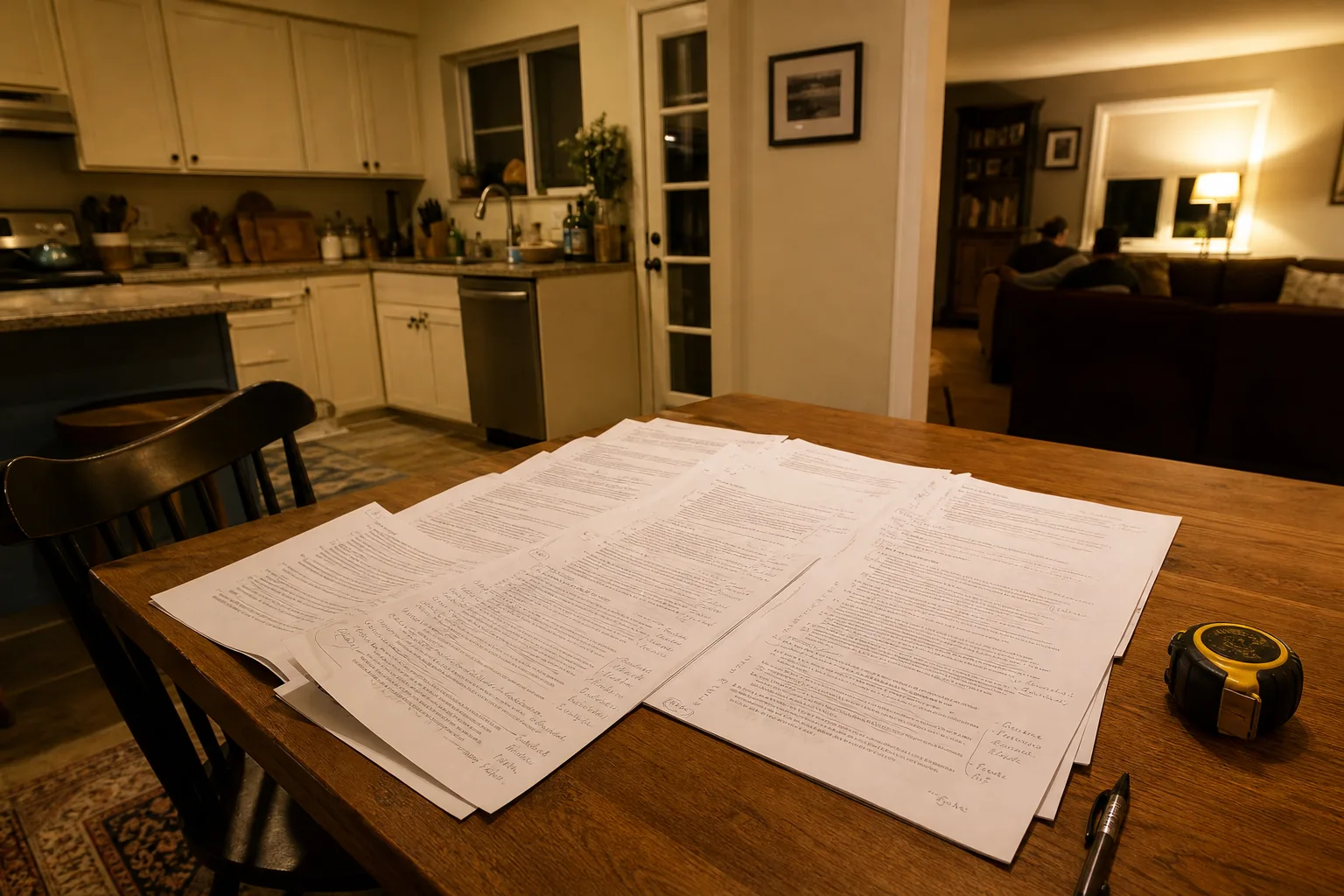
The document most homeowners sign is an estimate wearing a scope's clothing. It has a company logo, a total, a start date, and eight or nine lines describing the work in the shorthand a crew uses among themselves: demo bath, rough plumbing, tile per selection, paint. That is enough to price a job and nowhere near enough to govern one. The test is simple and it arrives early. When the wall opens and something unexpected is behind it, does the paper you signed tell you who decides what happens next, and at whose cost? Most of the time it does not.
The assumption, and what the two documents actually do
The common assumption is that a detailed estimate is a detailed scope, because both describe the work and the longer one must be better. They do different jobs. An estimate is a statement of what the contractor expects to spend and charge, organized by how the contractor buys labor and materials. A scope is a statement of what gets delivered, by whom, to what standard, in what sequence, with what left out. One is a budget instrument and the other is a control instrument. A nine-page estimate with no exclusions section, no allowance reconciliation method, and no change order procedure is still a budget instrument, and it will behave like one.
The gap shows up in the parts nobody prices. Who pulls and pays for the permit, who schedules inspections, who is responsible if the inspector requires work beyond what was drawn, where the dumpster sits, which hours the crew may run, what happens to the existing fixtures, who protects the floors on the path in. None of that changes the number on the estimate much. All of it changes the week. The Federal Trade Commission oversees unfair and deceptive practices in consumer contracts, which is the backstop, not the plan, and a backstop is a poor substitute for a paragraph you could have asked for before signing.
What changed, and why the old one-page scope stopped holding
Three things shifted in the last few years and they all pushed risk onto whichever party had not written anything down. Material pricing became volatile enough that contractors started carrying escalation language, so a quote that once held for ninety days now holds for thirty, or holds only until the supplier's quote expires. Lead times stretched and stayed stretched on a narrow set of items, which turned substitution from a rare courtesy into a routine occurrence that needs a rule. And energy and electrical code cycles kept moving, so a remodel that touches a panel, a bathroom circuit, or an exterior wall can trigger upgrades the original walkthrough never contemplated.
Those three pressures have produced a visible response in the paperwork, and it is mostly an improvement. Better scopes now name a price validity window and say what happens after it, define substitution as equal or better with written notice and a reconciliation of cost either way, and separate code-required work from discretionary work so a required upgrade is handled as a priced change rather than an argument. The documents got longer because the risk got more specific. A scope that still reads like it did a decade ago is not simpler. It is silent on the three things most likely to move your number.
Quantity, performance, allowance: which format suits which job
A quantity scope lists measured work: squares of roofing, linear feet of trim, a model number for every fixture. It is the most protective format for repetitive, well-defined work where the conditions are visible, and it makes a competing bid genuinely comparable, because two contractors pricing the same quantities differ only on price and method. Its weakness is renovation. The moment real conditions differ from the measurements, every line is a change order, and a job priced this way on an old house can accumulate a surprising stack of them.
A performance scope states the result and the standard rather than the parts: the bathroom will drain without ponding, the system will hold a stated temperature difference, the installation will meet the manufacturer's written instructions for warranty purposes. It suits work where the contractor knows more than you do about method, and it is the right format when you care about outcome and have no business specifying technique. It requires one thing to function, which is a stated, testable acceptance criterion. Without that, a performance scope is an opinion with a signature on it.
An allowance scope prices the labor and carries a dollar placeholder for selections not yet made. It is honest about an unfinished decision and it keeps a project moving. It fails when the allowance is set below what the selection will actually cost, which is how a kitchen priced at one number finishes at another without anyone behaving badly. An allowance is usable when it names the unit, says whether it covers delivery, tax, and installation, and states how an overage or an underage is settled.
The second look, and what to tell the reviewer to find
An independent review of a scope costs a fraction of one change order, and it is worth paying for on any job where the number is large enough that the wrong answer is hard to reverse. Hire the reviewer before signing, not after, and do not ask for a general opinion. Give instructions. Find every allowance and tell me what it actually buys. Find the exclusions and tell me which ones are likely to occur on this house. Tell me who pays if the inspector requires more. Tell me what the substitution rule is, what the price validity window is, and what triggers a change order in writing.
Ask for one more thing: the payment schedule read against the work schedule. A schedule that front-loads money ahead of delivered work is the single clearest signal a scope needs tightening, and it is also the easiest item to renegotiate before anyone starts.