Set Your Dwelling Limit Ten Years Ago? What Coinsurance Does to a Winter Repair
A dwelling limit set a decade ago and nudged along by inflation guard can fall below the threshold that keeps replacement cost intact, and partial winter losses are where that shows up.
Greta Holmqvist5 min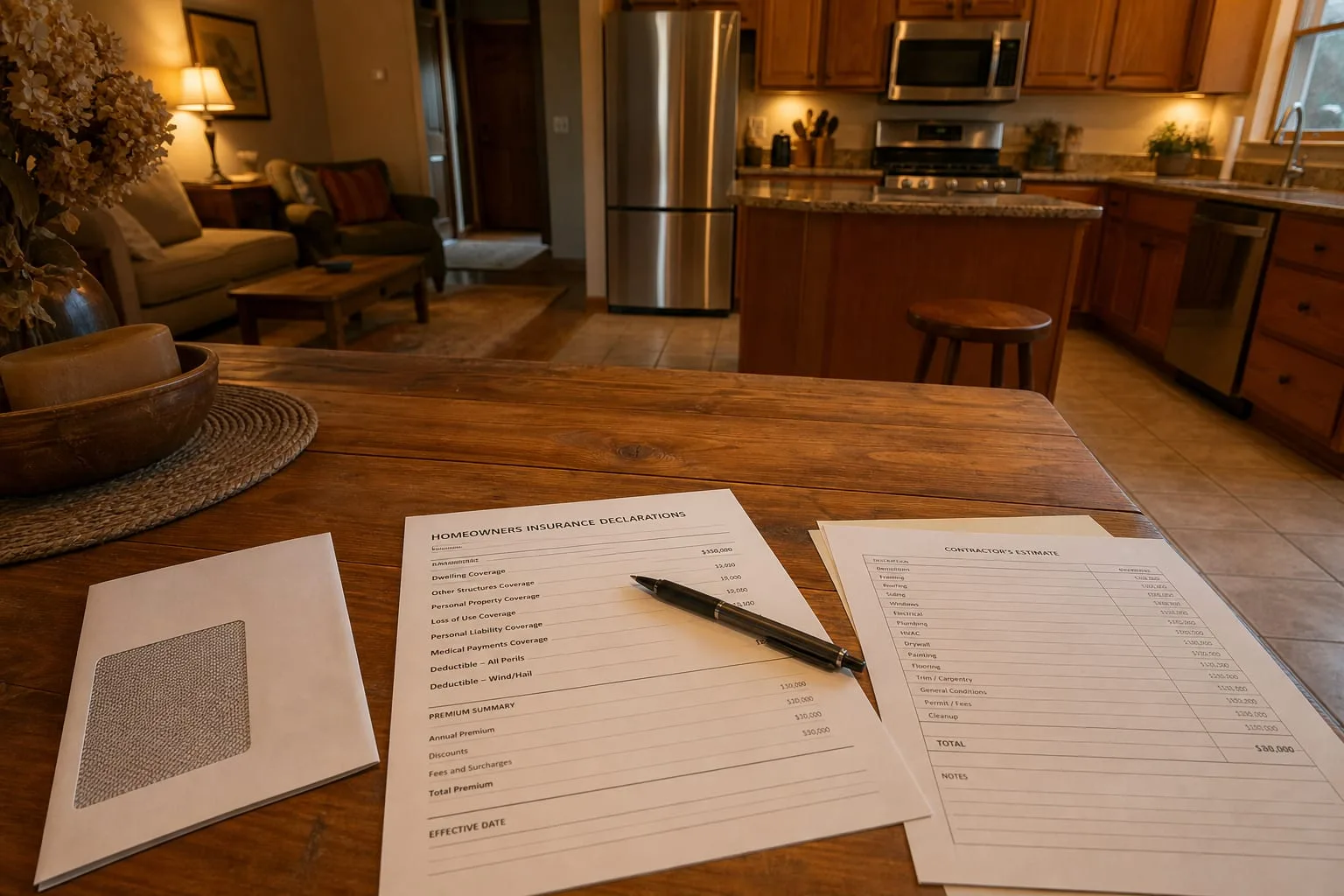
The renewal notice arrives in the fall for a lot of households, a few weeks before the first hard freeze, and it is the one piece of mail that gets skimmed for the premium and filed for everything else. The number that matters is further down: the dwelling limit, Coverage A, usually a round figure that was set when the policy was written and has crept upward a percent or two a year since. That figure is not just a ceiling on a total loss. In most policies it also decides, through a clause almost nobody reads, whether a two-thousand-dollar repair gets paid in full or gets paid proportionally.
The clause that decides a partial loss, not a total one
Homeowners policies promise replacement cost on the structure, but the promise is conditional, and the condition is that you carried a limit equal to at least a stated share of what it would cost to rebuild, commonly eighty percent. Insure to that level or above and a partial loss is settled at what the repair actually costs, subject to the deductible. Fall below it and the settlement is reduced in proportion to how far short you were, or dropped to actual cash value, which means depreciated. The clause is doing arithmetic, not judging you, and the arithmetic runs on every claim, however small.
This is what people mean by averaging. If your limit is only sixty percent of replacement cost when the policy asked for eighty, you are carrying three quarters of the coverage the contract assumed, and a covered repair is paid at roughly three quarters. On a total loss you would notice immediately, but total losses are rare. On a burst supply line behind a laundry wall, the shortfall shows up as a check that is short by several hundred dollars and a letter that explains why in a paragraph you have to read three times. The mechanism is old. What changed is how easily an ordinary household trips it.
What changed between the limit you set and the invoice you would get now
Ten years ago, setting the dwelling limit once and leaving it alone was defensible. Construction costs moved slowly, the inflation guard endorsement that bumps your limit automatically each renewal roughly tracked the market, and a household that bought a policy at closing and let it ride was usually still comfortably above the coinsurance threshold five or six years later. The gap between the limit on the declarations page and the real cost to rebuild opened slowly enough that nobody had to think about it between claims. Drift existed, but it was slow drift, and the endorsement absorbed most of it.
That relationship broke. Materials, framing lumber, roofing, drywall, and the trade labor to install any of it moved in a series of steps rather than a gentle slope, and the automatic escalator on a policy is a fixed small percentage that has no idea what happened to the price of a plumber. The Bureau of Labor Statistics is the federal agency responsible for tracking construction materials prices and wages in the building trades, and anyone who has priced a bathroom twice in the last decade already knows the direction. So a limit set in the middle of the last decade and escalated politely each year can now sit well under eighty percent of the real rebuild number, without a single thing about the house having changed.
The other change is on the insurer's side, and it works in your favor if you use it. Carriers now run replacement cost estimators at renewal, order aerial imagery, and sometimes send an inspector, which means the gap is often visible to them before it is visible to you. A household that calls and asks what estimator value the carrier has on file is asking a question that has an answer sitting in a file. Ten years ago that conversation was vaguer. Now the number exists, it can be compared against a contractor's estimate, and the limit can be moved mid-term rather than waiting for the anniversary.
Winter losses are partial losses, and partial losses are where averaging shows
Think about what actually goes wrong between December and March. A supply line splits behind a wall on a cold night and puts water into a subfloor. An ice dam backs melt under the shingles and stains a ceiling. A furnace fails and the house drops far enough that a pipe in an exterior wall follows it. None of these is a fire that takes the roof off. They are all repairs measured in the low thousands, involving two or three trades and a week of drying equipment, and every one of them is settled under the same replacement cost condition that a catastrophic loss would be. That is the season's real exposure for most households.
The small job is also where the cost has moved most sharply, and this compounds quietly. A two-hour plumbing repair in January is not a two-hour plumbing repair in June. The queue is longer, the after-hours rate applies, the minimum call-out is bigger, and the mitigation company that shows up with fans charges by the day whether or not anyone is on site. A loss that would have totaled a modest number a decade ago totals meaningfully more now, which means it eats more of the deductible spread and more of any proportional reduction. The claim gets bigger at the same time as the coverage percentage gets thinner.
The counterweight is that these are the easiest losses in the book to document. You can photograph the shutoff, keep the mitigation invoice, and get a written estimate from the contractor who does the repair, and an adjuster working from that file has very little to argue with. When the limit is adequate, a winter partial loss is close to the cleanest claim a household will ever file.
The one-hour job that closes the gap
Fixing this is a small job in the literal sense, and like most small jobs it is worth bundling with something already on the calendar. You need three numbers: the dwelling limit on your declarations page, the replacement cost figure your carrier's estimator currently shows, and an independent sanity check, which can be a per-square-foot rebuild figure from a general contractor you already trust or a written estimate you happen to have from recent work. If the first number is under eighty percent of the other two, the limit goes up. Raising it costs a fraction of what the shortfall would cost on a claim.
Two endorsements are worth naming while you have someone on the phone. Extended replacement cost adds a stated cushion above the dwelling limit, which absorbs the case where rebuild costs jump after the loss and before the work is done. Ordinance or law coverage pays for the code upgrades that a permit office will require on a repair to an older house, insulation, egress, electrical, which were a footnote ten years ago and are now a routine line item on a rebuild. Both are inexpensive relative to the dwelling premium, and both exist specifically to solve the shortfall problem rather than to paper over it.
The honest version of this decision is that it was once a set-and-forget item and is now an annual one, closer in spirit to changing the filter than to buying the furnace. Pull the declarations page out of the folder before the pipes have a hard week, read the line about replacement cost and the percentage it requires, and make the call while the house is dry and nobody is billing you by the hour.