The Scope Is One Page and Work Starts Monday. What to Add Before Then
The disputes that surface mid-job almost always trace back to four or five sentences nobody wrote, and the list of missing sentences has changed in the last few years.
Nikolai Dragomir4 min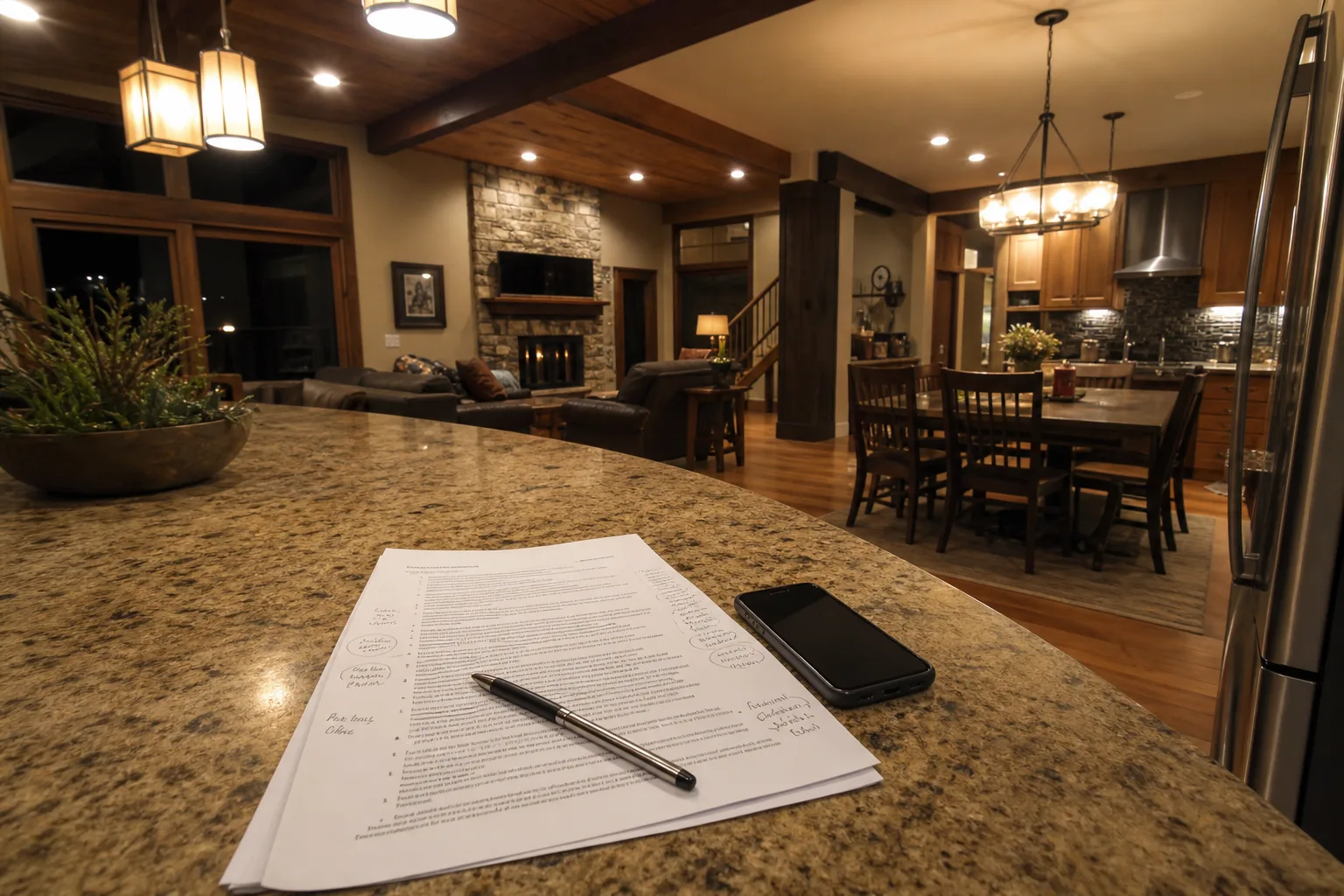
The call usually comes on a Tuesday, around ten in the morning, and it starts with the word so. So, the material came in at a different price. So, we opened the wall and the framing is not what we assumed. So, the person who priced this is no longer on the job. Nothing in that call is an emergency in the sense of water on the floor, but it is the moment the scope of work either holds or stops being a document and becomes an argument. Most of what goes wrong on a professional engagement was decided, or left undecided, before anyone showed up.
The consequences people blame on something else
A homeowner who waits eleven days for a countertop template usually blames the fabricator. A business owner who gets a consulting deliverable that is technically correct and practically useless blames the consultant's judgment. A landlord who pays twice to have the same section of siding flashed blames the weather. In each case the real cause sits further upstream, in a scope that named a result without naming a sequence, a standard, or a point of completion. Vagueness does not announce itself. It shows up as delay, as rework, as an invoice that is forty percent higher than the number you repeated to your spouse.
The pattern is consistent enough to be diagnostic. When a job goes sideways, read the scope first, before you read the emails. Nine times out of ten the missing sentence is obvious in hindsight and would have taken thirty seconds to write.
What changed in the last few years
Three things shifted, and they shifted the drafting. First, price escalation language moved from rare to routine. After several years of unstable material costs and freight, contractors and vendors began writing clauses that let a quoted price move if a commodity moves past a threshold, and many of those clauses are now boilerplate in documents that are otherwise fixed-price. Second, lead times became a scheduling variable rather than a footnote, so a start date and a completion date are no longer the same promise they were. Third, approvals migrated to text message, which is fast, convenient, and almost impossible to reconstruct six months later.
There is a fourth change that fewer people have adjusted for. A meaningful share of professional deliverables, from marketing copy to drawings to code, now passes through automated tools somewhere in production, which raises questions about ownership, confidentiality, and who is accountable for errors that nobody typed by hand. The Federal Trade Commission oversees unfair and deceptive practices in commercial dealings, and the practical effect of that oversight is that vendors are increasingly willing to answer the question directly if you ask it in writing before signing. Ask it.
The sentences a scope needs before work begins
Start with the boundary, not the task. A scope should say what is included and then say, in its own sentence, what is excluded, because the exclusions are where the second invoice lives. Name the standard of completion in terms somebody else could verify: not paint the room but two coats over primer with the trim cut in and the switch plates reinstalled. Name the materials by manufacturer and grade, because a substitution clause with no named baseline is an open door. Name the schedule as a start window, a working-days duration, and the specific conditions that pause the clock, which in most trades means permits, inspections, and ordered material.
Then handle money and change. The scope should state the payment points and what has to be true before each one is earned, which turns a deposit dispute into an arithmetic question. It should state who on the vendor's side has authority to approve a change and who on yours does, by name, and it should state that changes are priced and accepted in writing before the work happens. If an escalation clause exists, make it quantitative: which material, which index or supplier quote, what threshold, and what notice you get before the number moves.
The first hour after the work and the paper diverge
When the Tuesday call comes, the order of operations matters more than the tone of it. Do not authorize anything on the phone. Ask for the change in writing with a price and a schedule effect, say you will respond today, and hang up. Walk the work and photograph the condition being described, because conditions get covered up quickly and a photo taken at hour one is worth more than an argument at week six. Then read your own scope against what you were just told, and separate the genuine unknown from the thing that was always going to be needed and simply was not priced.
What can wait until morning: the invoice, the contract review, the question of whether you were overcharged. What cannot: stopping work on the disputed portion only, in writing, while the rest continues. Partial stoppage keeps momentum and keeps leverage.
A scope written this way takes an extra twenty minutes and one uncomfortable conversation before anyone starts. That conversation is the whole product. The crews and firms worth hiring tend to welcome it, because a clear boundary protects their margin as much as it protects your budget, and because the questions you ask up front are the ones they have already answered internally.