Reused a Password on a Site That Got Breached? The First Hour, and What Can Wait
When a password you reuse turns up in a breach, the order you work in matters more than the strength of the replacement.
Nikolai Dragomir4 min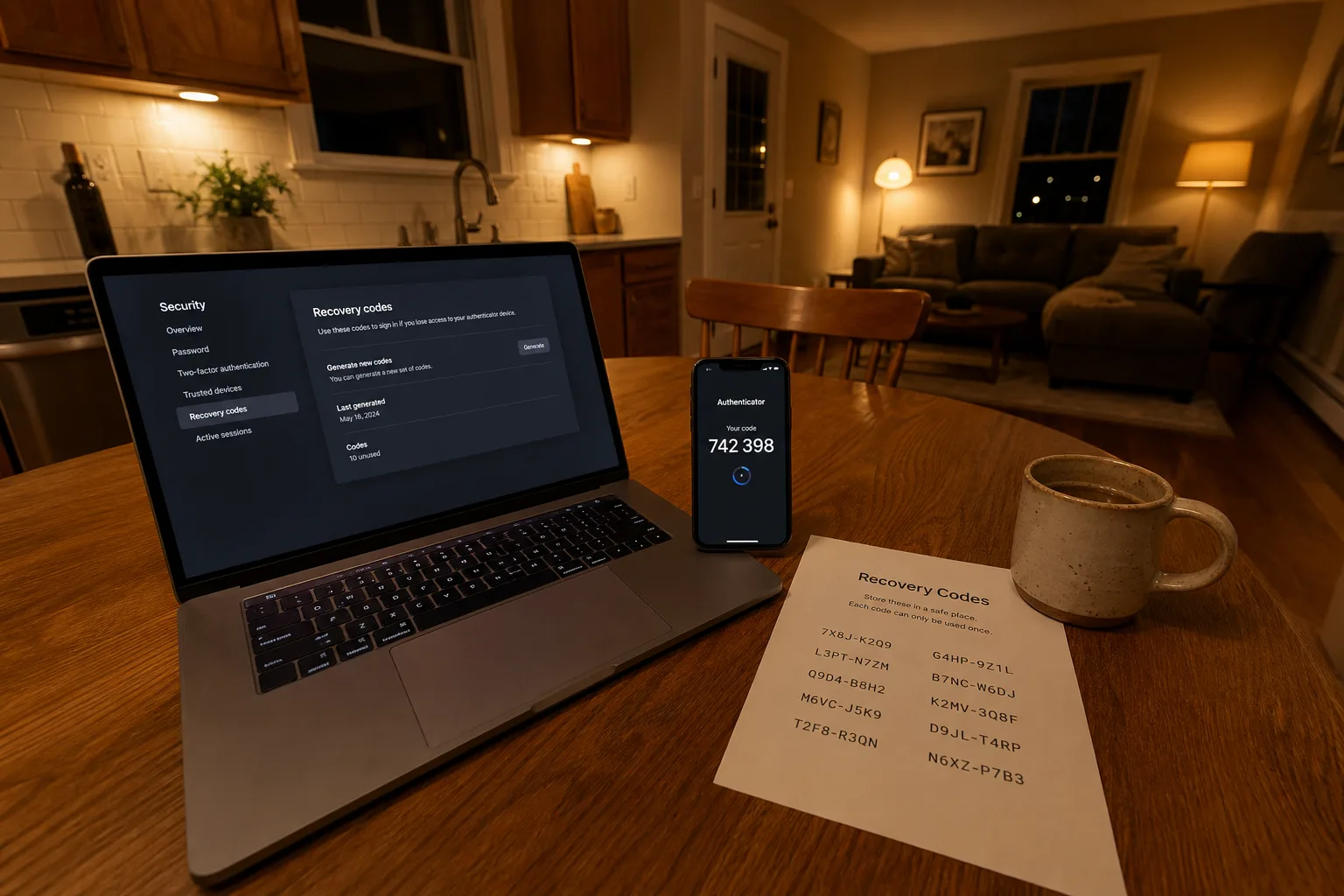
The message arrives at an inconvenient hour, usually from a service you barely remember joining, and it says that email addresses and hashed passwords were taken. Your first instinct is to sit down and change everything, starting with whatever you happen to think of first. That instinct wastes the hour that matters. In a household breach, the risk is not that one hobbyist forum account gets opened; it is that the same password, or a close cousin of it, opens the mailbox that can reset every other account you own. Work in order, and most of this is finished before bed.
The mailbox is the master key, so it goes first
Every account you hold has a password reset link, and nearly all of those links land in one inbox. Someone with your email password does not need to guess anything else; they walk through your bank, your pharmacy, your utility portal, and your kid's school account one reset at a time. So the first thing you change is the email password, and the second thing you do, in the same sitting, is open the account's security settings and read the list of devices and active sessions. Sign out of everything you do not recognize. Then check the forwarding rules and the recovery address, because an intruder who has already been in will often leave a quiet copy of your mail going somewhere else.
The rules you were trained on stopped being the rules
Most people still carry a mental model built around complexity: a capital letter, a digit, a punctuation mark, and a fresh variation every quarter. That model produced predictable results, because a household under that pressure writes Spring2024! and then Summer2024!, which a cracking tool handles as easily as a dictionary word. The National Institute of Standards and Technology is responsible for the federal digital identity guidance that most of those workplace rules were copied from, and the guidance moved years ago toward length, uniqueness, and screening against known-breached passwords rather than forced complexity and scheduled rotation. What that means at your kitchen table is simple. A long passphrase you can actually recall, different on every account that matters, beats a short scramble you rotate on a calendar.
A second factor changes the math, but not all second factors are equal
Once the email password is replaced, turn on two-factor authentication if it is not already on, and choose the strongest option the service offers rather than the first one it suggests. Codes sent by text are far better than nothing and are worth enabling tonight if that is all there is, though they can be defeated by someone who persuades a carrier to move your number to a new SIM. An authenticator app on your phone is a meaningful step up. A passkey, which ties the login to a device you hold and removes the shared secret altogether, is better still, and more banks and retailers support it every year. Print or save the recovery codes somewhere physical, because losing a phone with no backup path is the failure most households actually hit.
What genuinely waits until morning
Everything else. The forum that got breached, the streaming service, the airline miles account, the twelve stores that made you register to buy one thing: none of those need to be handled at midnight, and trying will leave you sloppy on the ones that count. In the morning, work down a short list in order of what a stranger could do with access. Bank and brokerage first, then anything holding a stored card, then health and insurance portals, then the rest. If you use a password manager, its breach-monitoring report will tell you where the reused password still lives, which turns a vague worry into a finite list of maybe fifteen entries. Change those, and leave the dormant accounts closed rather than updated.
What to watch for over the next two weeks
Breached credentials get traded and tested for a long time after the original incident, so the follow-up matters as much as the first hour. Expect a run of password reset emails you did not request, and treat each one as information rather than an emergency: it tells you which account someone is probing, and that account needs a unique password and a second factor today. Watch for a phone that suddenly loses service, which is the signature of a SIM swap and warrants a call to the carrier from another line. Check card statements for small test charges. If your bank offers login alerts, turn them on now, while you are already in the settings.
The household version of good password practice fits on an index card. One long unique passphrase per account that matters, a manager to hold the rest, a second factor on the mailbox above all, and no scheduled rotation for its own sake. The hour you spend tonight in the right order is worth more than a weekend spent in the wrong one.