Quoted a Nine Year Payback? The Documents and Checks That Decide Whether It Holds
Payback on a real roof is decided by a production model, a utility tariff, and the condition of the deck under the array. Here is how to check all three before you sign.
Enzo Battaglia5 min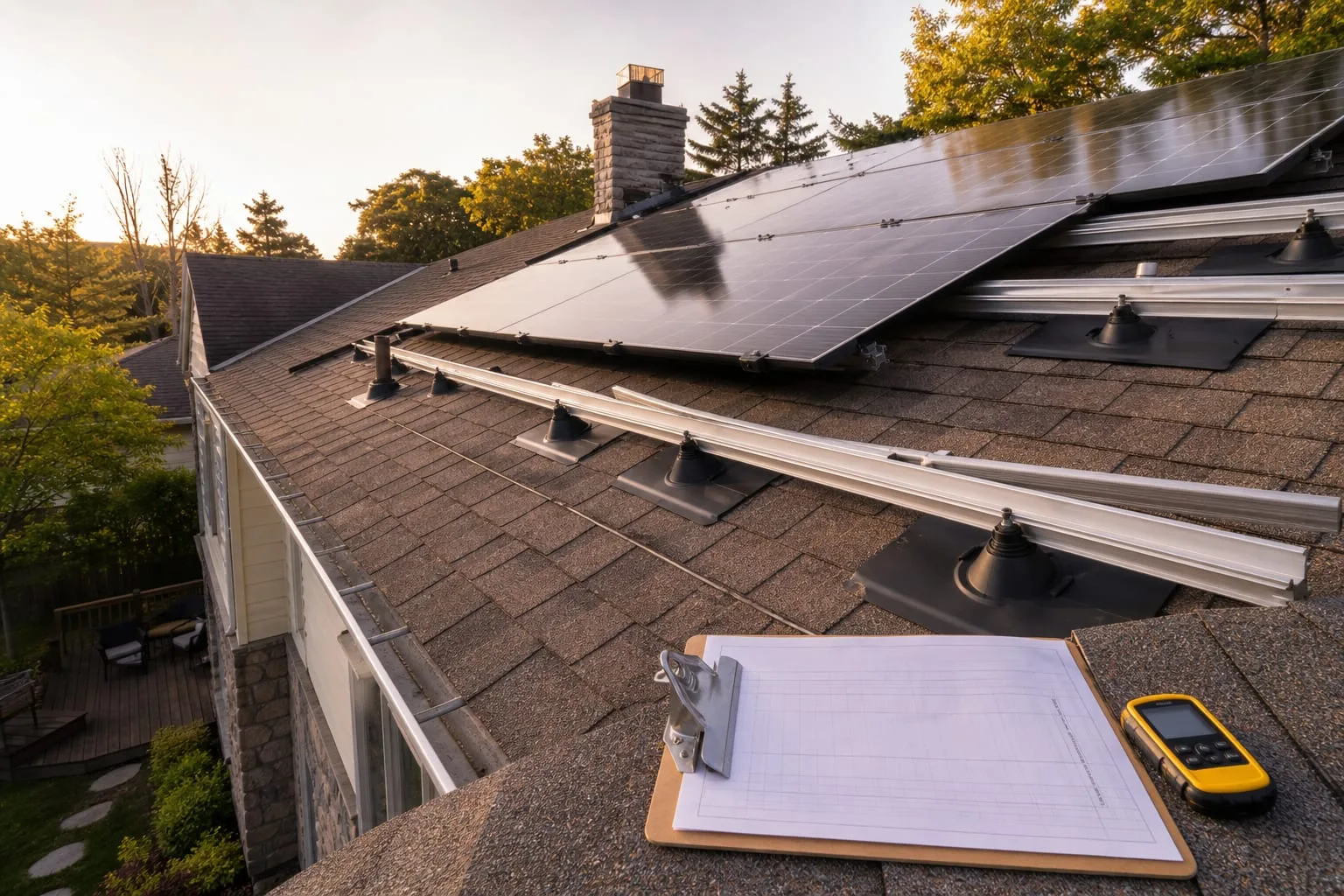
The proposal says nine years, the neighbor two doors down was told seven, and both houses face the same direction on the same street with the same utility. That gap is almost never dishonesty. It is the ordinary result of two different models fed slightly different assumptions about shade, consumption, rate increases and panel degradation, then rounded into a single headline figure that reads like a fact. Payback is a calculation, not a specification, and the parts of it that move most are knowable in advance. Most of them sit in documents you can ask for before anyone climbs on the roof.
Three inputs do most of the moving
The first is the production estimate, expressed in kilowatt hours per year, which depends on orientation, pitch, module count, inverter efficiency, and shading measured on your roof rather than assumed from a satellite image. The second is the rate escalation assumption, the annual percentage by which the model grows your utility bill, because a model that escalates aggressively shortens payback on paper without changing a single physical thing about the system. The third is your own consumption profile, hour by hour, which decides how much of the production offsets retail electricity and how much is exported at a lower value. The Department of Energy supports the national research behind solar performance modeling, and the modeling tools that come out of that work are the same ones a careful installer is using.
Ask for the three inputs separately, in writing, and ask what shading measurement produced the production number. A drone survey or a roof-level irradiance reading is a different quality of evidence than a desktop estimate, particularly on a lot with mature trees, a chimney, a neighboring gable, or a second story that throws winter shade the aerial photo did not capture in July. When an installer hands over the annual production figure alongside the month by month breakdown, you have something you can test later against the monitoring portal.
The roof under the array decides more than the panels do
A twenty five year array on a roof with eight years of shingle life left is not a twenty five year decision, it is an eight year decision with a removal and reset bill attached, and that bill is the single largest hidden variable in most payback arithmetic. Removal and reset means detaching the modules and racking, storing them, reroofing, then remounting and rewiring, and it is priced per panel by most crews. It also reopens every penetration. If the remaining shingle life and the array life are within a few years of each other, the arithmetic usually favors reroofing first, at which point the flashing and the mounts go on new material and the two lifespans run together.
Deck condition matters as much as covering. Racking loads transfer through lag bolts into rafters or trusses, so the fastener has to find framing rather than sheathing, and older decking, thin plank sheathing, prior layers of shingle, or localized rot near valleys and vents all change how the attachment is engineered. Ventilation matters too, since an array shades and slightly alters airflow across the field. None of this is exotic. It is simply information that the sales visit is not structured to collect.
When the second look is worth paying for, and what to tell the inspector
An independent roof inspection, paid for by you and owed to nobody in the transaction, is worth its fee on any roof over about ten years old, on any house where the covering age is unknown, and on any project where the array will cover most of a plane. Hire a roofer or a licensed home inspector who is not bidding the solar work, and put the assignment in writing rather than asking for a general opinion, because a general opinion comes back as a general answer.
Tell the inspector what to look for: remaining service life of the covering with a stated basis, the number of existing layers, decking type and thickness, framing spacing and species where visible from the attic, evidence of prior leaks at penetrations, valleys and the ridge, moisture readings in the attic sheathing, adequacy of intake and exhaust ventilation, and whether the planned array footprint sits clear of valleys, plumbing vents and the drip edge. Ask for photographs and a written report addressed to you. That document does two things: it tells you whether to reroof first, and it becomes the baseline that settles any later argument about whether a stain in the attic predates the mounts.
The paperwork that fixes the numbers in place
Payback lives in five documents, and they are all obtainable. The interconnection agreement with your utility, which states what you may install and under what terms. The tariff or rate schedule you will be moved onto after interconnection, named specifically, because net metering, net billing and time of use structures value the same kilowatt hour differently and the credit rules, the true-up date and the treatment of annual excess are written there rather than in the proposal. The federal residential clean energy credit, claimed on IRS Form 5695, which requires you to keep the invoice, the contract and the placed-in-service date. Any state, utility or municipal incentive reservation, which typically carries an expiration and a completion deadline. And the warranty set, meaning module, inverter, workmanship and roof penetration coverage, each with its own term and its own transfer language if you sell.
Read the ownership structure alongside them. A cash purchase, a loan, a lease and a power purchase agreement produce four different payback definitions, and a lease or PPA may involve a filing against the property that a title company will find at closing. Knowing that early is simply useful.
What the folder looks like after the first year
Keep the modeled monthly production alongside the actual monthly production from the monitoring portal, and compare them in kilowatt hours rather than dollars, because dollars mix production performance with rate changes and consumption changes and tell you nothing clean. Keep twelve months of pre-installation utility bills as the consumption baseline. Keep the annual true-up statement, which is the document that shows what your exports were actually worth. Keep inverter fault notifications, because a string offline for six weeks in July shows up as an ordinary looking shortfall until someone reads the log. A folder with those four things in it turns a warranty conversation or a performance guarantee claim into a short exchange.
The houses where the payback figure holds up are rarely the ones with the best roof. They are the ones where somebody established the roof's condition before the mounts went in, read the tariff they were being moved onto, and kept the production log honestly for the first twelve months. That work costs an inspection fee and a few phone calls, and it is available to anyone willing to ask for the inputs one at a time.