Quoted a Home Battery? The Standard Numbers on the Proposal and What They Decide
Home battery proposals hinge on a handful of listing marks, code clearances and warranty terms, and an independent inspection can be told exactly which ones to check.
Enzo Battaglia4 min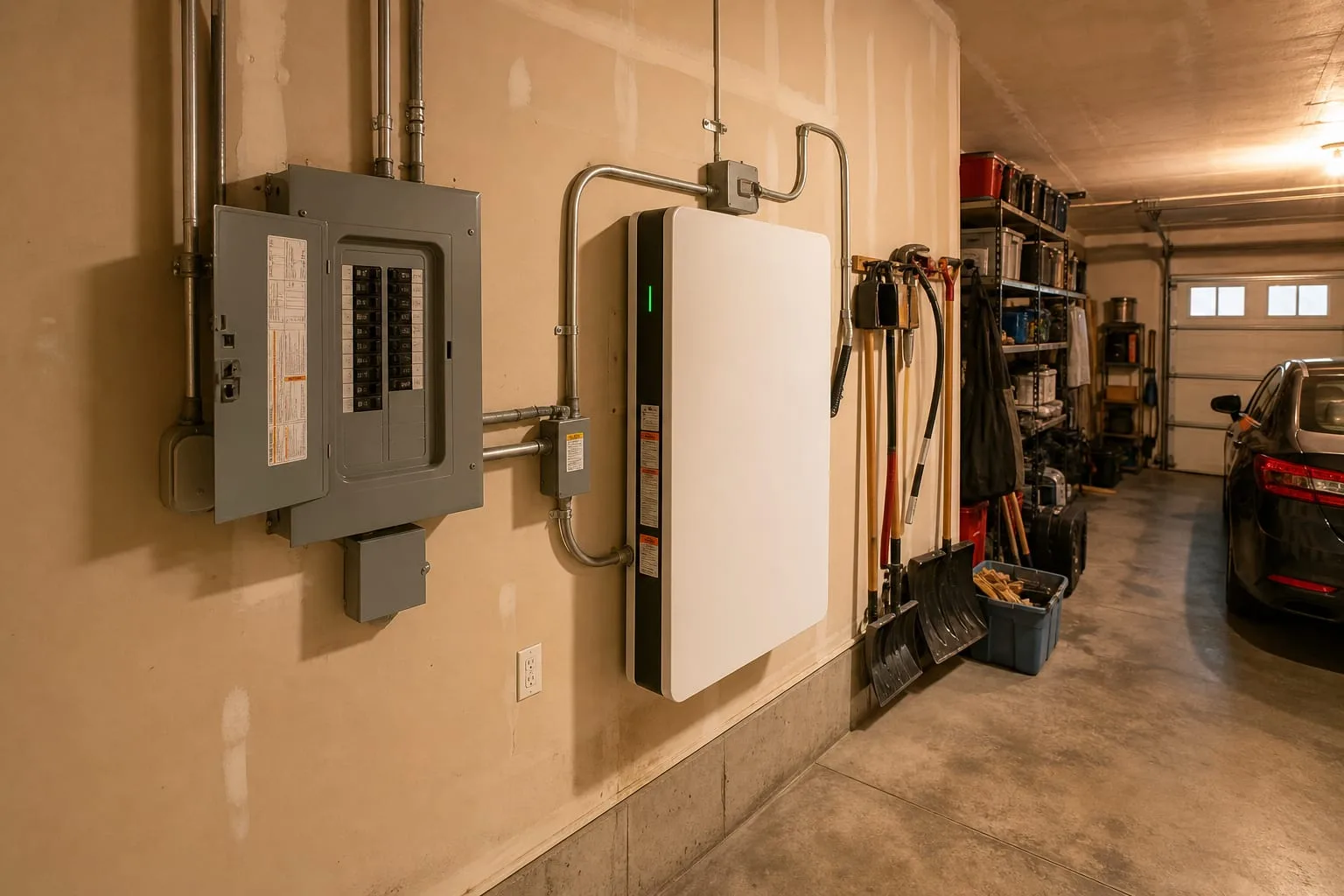
The symptom is almost always the same. A proposal lands with a battery on it, the monthly number looks tolerable, and somewhere in the appendix there is a page of certifications nobody explained. The customer reads the payback estimate carefully and skims the part that decides whether the equipment can legally be mounted where the drawing shows it. That order is backwards. The listings, clearances and interconnection terms are the constraints; the savings estimate is a projection built on top of them, and when the constraints move, the projection moves with them, usually in the direction the customer did not want.
Start with what the battery is being asked to do
A battery earns its place in one of three ways, and the three do not size the same. Backup during outages rewards capacity and a properly built critical loads subpanel. Shifting consumption out of expensive afternoon and evening hours rewards power output and daily cycling, and depends entirely on the rate schedule you are actually on, not the one you were on when you signed for panels. Storing export that the utility no longer credits at retail is a third case again. Ask which of the three the proposal assumes, then ask what happens to the numbers if you are moved to a different rate.
This matters on the customer's side because the answer determines how much of the system you will ever use. A twenty kilowatt-hour battery installed for outage coverage in a neighborhood that loses power twice a decade is doing a different job from the same battery cycling most days against a time-of-use spread. Both can be reasonable. Only one of them is paying you back in ordinary weather. Get the assumption written into the proposal in a sentence you could read aloud to a stranger, because it is the sentence every later dispute returns to.
The listing marks are not decoration
Two references do most of the work on a residential storage job. The first is the product safety listing, commonly cited as UL 9540, which covers the energy storage system as a complete assembly rather than the cells alone. The second is the fire propagation test data usually referenced as UL 9540A, which is what a plans examiner or fire marshal leans on when deciding whether a unit can sit inside a garage, how far it must stand from a door or window, and whether more than one unit can be grouped on the same wall. The installation side is governed by the fire code adopted locally, generally NFPA 855, together with the National Electrical Code articles covering storage and interconnection.
What this means practically is that the placement on your site plan is a code outcome, not a preference. Separation from openings, clearance from the electrical panel, distance between stacked units, whether a rated wall or a detached location is required: these are decided by the authority having jurisdiction reviewing the permit, and they are decided before energization, not after. A proposal that shows a battery in a hallway closet or under a bedroom window has either done that homework or is about to hand you a change order.
The interconnection file you never see
Almost every grid-connected battery needs the utility's permission to operate, and that approval is a separate track from the building permit. The inverter has to be certified to the grid support standard the utility names, typically IEEE 1547 with the state's adopted profile, and the settings loaded into it have to match what the utility approved. Delays here are common, undramatic and entirely invisible to the homeowner until the equipment sits on the wall for weeks doing nothing. Ask who files the interconnection application, what the current queue time is in your territory, and what the contract says about payments due while the system is installed but not yet authorized.
The advertising side has its own oversight. The Federal Trade Commission is responsible for how energy savings and financing claims are presented to consumers, which is worth remembering when a salesperson quotes a bill reduction with no rate schedule attached. Savings language belongs in the contract with its assumptions stated, or it does not belong in the decision at all.
Read the warranty as three separate promises
A storage warranty is usually a capacity retention figure, a term in years, and an energy throughput cap, and whichever one you reach first ends the coverage. A household cycling hard for rate arbitrage can hit the throughput cap years before the calendar term expires, which is exactly the usage pattern the same proposal encouraged. Then there is the question of who performs the work: the manufacturer typically covers the hardware, while labor, removal, shipping and the electrician's time are often the installer's obligation under a separate workmanship warranty with a shorter term. Ask for both documents before signing, not after.
What to tell an independent inspector to look at
A few hundred dollars for an unaffiliated electrician or a licensed inspector with storage experience buys a second look at the things that are expensive to move later. Give them a specific list. Confirm the listing marks on the installed equipment match the model on the permit. Confirm the clearances at the actual wall, with the actual door and window openings, against the fire code the jurisdiction adopted. Confirm the critical loads panel contains what you were told it would, and that the labeling, disconnect and rapid shutdown provisions are in place. Confirm the inverter settings match the approved interconnection application. Written findings, dated, before final payment.
Batteries do earn their place, reliably, when the job they are doing is stated plainly and the equipment is placed where the code allows it to work. The second look is what turns a proposal into something you can hold the installer to.