Never Hired a Lawyer? Five Documents That Decide Whether You Actually Need One
Most first-time legal problems are decided by paperwork you already own, and five specific documents tell you whether an attorney is necessary or merely expensive.
Greta Holmqvist4 min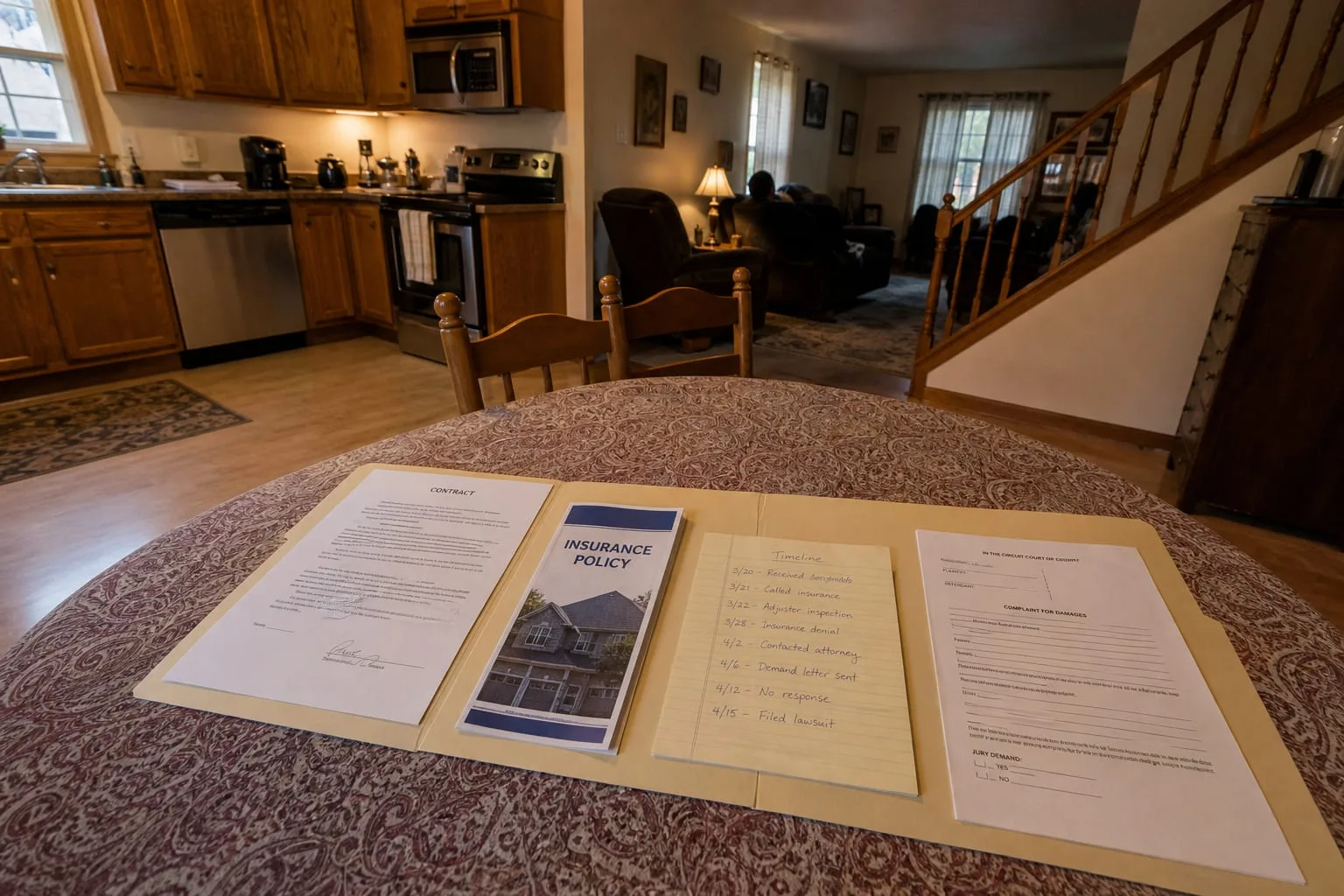
The hardest part of a first legal problem is not the law. It is the sizing. Someone who has never hired an attorney has no sense of scale, so a disputed eight hundred dollar invoice and a threatened lawsuit feel roughly the same weight, and both feel like something that requires a professional in an office with a conference table. In practice the sorting is done on paper, and almost always with paper the household already has in a drawer, a inbox, or a photo roll. Five documents do most of the deciding, and pulling them before you call anyone changes what the call costs.
One, the written timeline you build yourself
Before any contract or statute matters, write down what happened in dated order, one line per event, with the source of each date named next to it: the deposit check, the text message, the delivery confirmation, the day the crew stopped showing up. This is unglamorous work and it takes about an hour, but it is the document that most often makes an attorney unnecessary, because a clear chronology tends to reveal either an obvious answer or an obvious gap. First-timers routinely discover, halfway through, that the thing they were angry about happened after they signed something authorizing it, or that the delay they were blaming on a contractor lines up exactly with a permit date. A timeline you can hand to a stranger is also the difference between a paid hour spent on your problem and a paid hour spent on your narration.
Two, the contract, including the pages you skipped
Find the actual signed agreement rather than the estimate, the brochure, or the email that summarized it, and read the back half, where the money clauses live. What you are looking for is narrow: the dispute resolution clause, the notice provision, any attorney fee shifting, and the warranty or cure period. Notice provisions are the ones that quietly decide outcomes, because many contracts require written notice of a defect within a stated window and delivered a stated way, and a phone complaint does not satisfy a clause that says certified mail. Fee shifting matters in the opposite direction: a contract that makes the losing side pay legal costs turns a modest dispute into something worth an attorney's time, since the fee is no longer automatically larger than the recovery. If neither clause exists, you are usually in letter-and-small-claims territory rather than litigation territory.
Three, the number, measured against your county's small claims ceiling
Every state sets a dollar limit for small claims, and the figure varies widely enough that the only reliable source is your own county court's website, which will also list the filing fee and the service requirements. Get your number honestly: what you actually paid, what it will actually cost to correct, supported by a written estimate from someone willing to put a letterhead on it. If the corrected figure sits comfortably under the ceiling, the procedural design of that court assumes you will appear without counsel, the forms are written for that, and hiring an attorney to appear for a claim of that size is usually spending two dollars to chase one. If the number sits above the ceiling, or if the harm is ongoing and hard to price, the calculation flips, and it flips for a specific reason rather than a general feeling of being wronged.
Four, whoever else is already obligated to you
A surprising share of first legal problems belong to somebody who is contractually or statutorily on the hook before any lawyer gets involved, and the document that proves it is often a policy, a warranty registration, a card, or a license number. Homeowners policies cover some losses people assume they must sue over. Credit card issuers reverse charges for services never delivered. State licensing boards discipline contractors, and many states run recovery funds for exactly the case where a licensed contractor took a deposit and vanished. The Federal Trade Commission oversees consumer protection at the federal level and takes complaints about deceptive business practices, which is a useful channel for patterns rather than a way to collect your particular refund. Working these first costs postage and an afternoon, and if one of them pays, the legal question dissolves.
Five, anything with a running deadline printed on it
Sort your paperwork one more time and look only for dates that constrain you: a summons or complaint, a notice to quit, an insurance appeal window, a mechanic's lien filing, an administrative deadline stamped on an agency letter, a demand that says respond within a set number of days. A served lawsuit is the clearest single indicator that this is not a self-service problem, because default judgments are entered quietly and are far harder to undo than they were to avoid. The same is true of anything irreversible: a document that transfers property, waives a claim, or settles a case in exchange for a release. Those are the moments where a first-timer should stop reading and start dialing, and where the fee is small measured against what the signature does.
What to do with the folder once you have it
Keep the five items together, in that order, in one physical folder and one scanned copy, because the folder is now the thing that makes a short consultation productive and the thing that makes a demand letter credible if you write it yourself. Most people find the folder answers the question on its own: three of the five point toward a form, a phone call, or a claim, and two point toward counsel. When it does point toward counsel, bundle the questions. Ask about your specific document, your specific deadline, and what happens if you do nothing, in one sitting.
Sizing the problem is the job. The folder is how you do it.