Getting a Legal Fee Quote After Bad Work? What the Number Is Measured Against
An attorney's fee is priced against a defined scope, and the paperwork you bring, including an independent inspection, is what sets that scope.
Enzo Battaglia4 min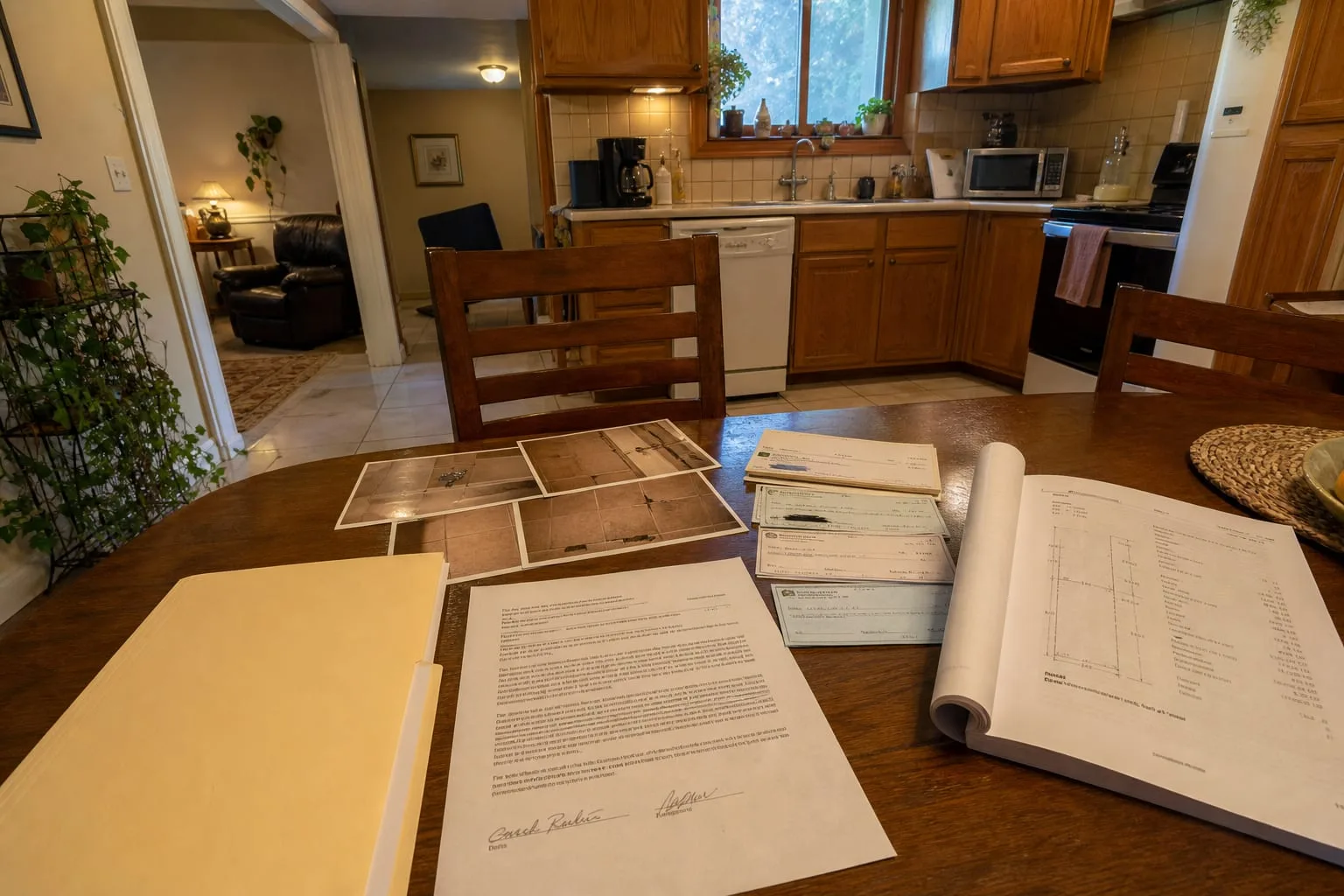
The call usually happens a week or two after the argument, when the contractor has stopped answering and the tile is still lifting. You ask what it will cost to get a lawyer involved, and you get a range so wide it tells you nothing: a few hundred to send a letter, several thousand to file, unknowable after that. The range is not evasion. It reflects the fact that nobody has yet defined what the work is, and a fee cannot be quoted against a grievance. It gets quoted against a scope, and the scope is built from documents you already control.
Three fee structures, three different things being measured
An hourly rate is quoted against estimated attorney time, which means the number moves with how much of the file the attorney has to assemble himself. A flat fee is quoted against a bounded task: a demand letter, a contract review, a filing in small claims. A contingency percentage is quoted against a recovery, which is why an attorney taking one will ask about the defendant's insurance and assets before he asks about your damage. Each of those is a different question, and the answer to all three improves when the underlying facts arrive organized, dated, and reduced to a dollar figure someone else calculated.
Households often assume the lawyer's rate is the variable worth shopping. It is the least variable part. Two attorneys with the same rate can quote hours apart on the same dispute, because one is looking at a folder with a signed contract, a payment history, and a written repair estimate, and the other is looking at a text thread and a description of what went wrong. The second attorney is pricing in the hours it takes to become the first.
The paperwork that shortens the estimate
Six things do most of the work. The signed contract or proposal, including whatever specifications were attached to it. Every change order, whether it was signed or agreed to in a text. The payment record, meaning canceled checks, card statements, or transfer confirmations, showing amounts and dates rather than a recollection of amounts. A dated photo sequence, starting before the work if you have it. The complete written communication thread, exported rather than screenshotted, in the order it happened. And a one-page timeline you write yourself, listing what happened on what date in plain sentences, with no adjectives.
That last document is the one people skip and the one attorneys value most, because it converts a two-hour narrative meeting into a twenty-minute review. Write it flat. On this date the crew opened the wall, on this date you paid the second draw, on this date you sent the photo of the standing water and got no reply. Save the anger for the conversation. The timeline is a working instrument, and the paid hour it saves is a real hour that shows up on the invoice you eventually receive.
The second look, and what to tell the inspector to answer
The document that most changes a fee quote is one you have to go buy: an independent inspection by someone with no stake in the outcome and no relationship with the original contractor. A licensed engineer, a home inspector with the relevant credential, a manufacturer-certified installer from a different company. What matters is that you brief the inspection rather than simply commissioning it. Ask for four written answers: what the physical cause is, which code section or manufacturer specification the installation departs from, what the full remediation scope is, and what that scope costs to complete.
Those four answers turn a complaint into a claim with a number attached. Cause supports liability, the code or specification citation supports the standard the work failed to meet, and the cost to cure is the damages figure a demand letter is built around. An inspection that says the tile work is poor quality is worth very little; one that says the substrate deflection exceeds the manufacturer's stated tolerance and full removal and replacement of 340 square feet is required at a stated price is worth the several hundred dollars it costs, several times over. The Federal Trade Commission oversees consumer protection in transactions like these, and its framework rewards exactly this kind of documented specificity.
Where the number moves after the first meeting
A quoted fee assumes the dispute stays inside the shape it had when it was quoted. It grows when the other side files a counterclaim, when a lien gets recorded against your property and has to be answered on the clerk's calendar rather than yours, when a second trade turns out to have contributed to the damage, or when a required pre-suit notice period restarts the clock. Ask at the first meeting which of those is plausible here, and what the fee looks like in each case. A good answer is specific about the trigger, not just the amount.
You can also cap exposure deliberately: buy a defined piece of work, such as a demand letter drafted from your file and your inspection report, and then decide again with better information. Many disputes settle at that stage, because a letter carrying a dated timeline and an engineer's cost to cure reads very differently from one carrying an accusation.
The folder is the leverage. Assemble it before the consultation, spend the few hundred dollars on a second set of eyes that has been told precisely what to answer, and the fee quote you receive will be narrower, lower, and considerably more honest about what the next step actually involves.