Hiring Out the Upkeep for the First Time? The Rules That Cover the Job Before You Sign
Chimney sweeps, duct cleaning, mold work and gutter crews arrive with certificates that mean different things. Here is what already protects you, and when a second look pays.
Enzo Battaglia4 min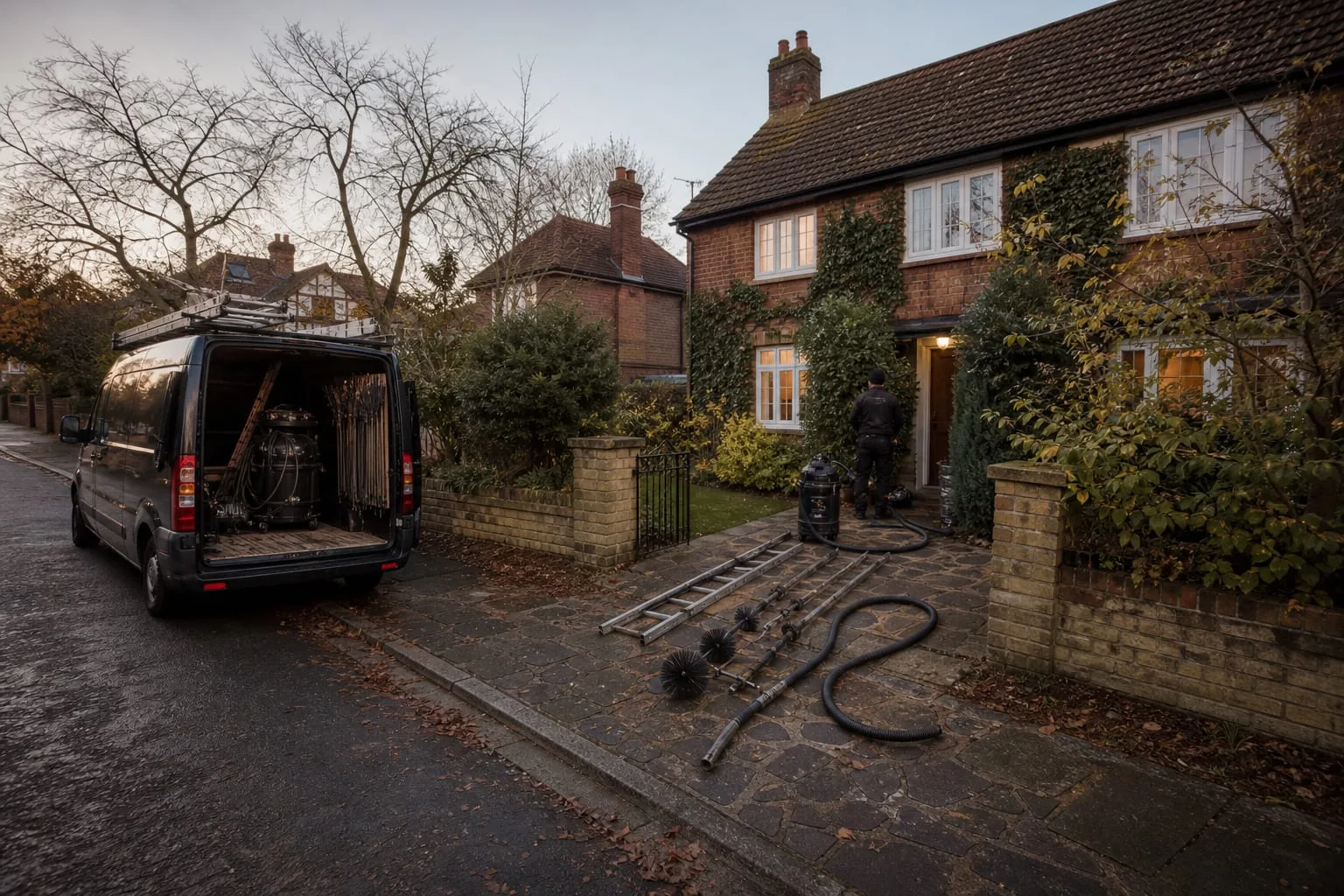
The first time a household pays someone to do a maintenance job rather than doing it badly on a Saturday, the hard part is not choosing between quotes. It is that the buyer has no reference point for what finished looks like. A chimney sweep, a duct cleaning crew, a mold remediation outfit and a gutter company all arrive with a magnet on the door and a laminated card, and all four of those cards mean something different. Some are licenses issued by a state. Some are trade certifications bought with a class and a test. One or two are neither.
The card on the dashboard is not always a license
In most states, a plumber and an electrician hold an occupational license, meaning a public body tested them, tracks them, and can take the license away. Chimney sweeping, duct cleaning, pressure washing and routine gutter work usually sit outside that system entirely, governed instead by a general contractor registration threshold that a small cleaning job may never cross. What fills the gap is private certification: the chimney trade, the air duct trade and the restoration trade each run their own credentialing programs, with written exams and continuing education. That is worth something. It is not a license, and it carries no complaint process with subpoena power behind it.
So the first question to a new company is not whether they are certified but which credential they hold, who issued it, and whether the state requires anything on top. A second question does more work than either: ask for the certificate of insurance, sent directly from the insurer or agent rather than photocopied from a folder, showing general liability and workers' compensation in force on the day of the job. A gutter crew works from ladders. If someone falls on your property uninsured, the exposure travels to you.
Protections that apply whether or not anyone mentions them
Several rules attach to this work automatically. If the house was built before 1978 and the job disturbs painted surfaces, the federal lead-safe renovation requirements apply, and the firm must be certified for that work and must give you the lead hazard pamphlet before starting. The Environmental Protection Agency oversees that program and also publishes the government's guidance on indoor mold cleanup, which matters because mold remediation is one of the least regulated corners of this trade. Separately, federal rules give a buyer a three-day window to cancel certain contracts signed in the home rather than at a place of business, which is exactly how storm-season upkeep work tends to be sold.
Most states add their own layer: a home improvement contract statute setting a dollar threshold above which the agreement must be written, a deposit cap limiting what can be collected up front, and a state attorney general's consumer division that takes complaints. None of this is announced by the person standing on your porch. A first-time buyer who simply asks whether the job crosses the state's written-contract threshold changes the tone of the conversation, because the answer reveals immediately whether the company knows its own rules.
When the second look is worth paying for
Paying an independent inspector to look at work you have already been quoted feels like paying twice. In three situations it is the cheaper path. The first is any case where the same company diagnoses the problem and sells the cure, which describes most duct cleaning and nearly all mold remediation. The second is anything hidden after completion: a chimney liner, a crawl space vapor barrier, ductwork sealed back up. The third is a job priced far above the range of the other bids, where the extra scope needs a witness who is not being paid out of it.
Tell the inspector what to look for rather than asking for a general opinion. For a chimney, ask for a Level 2 inspection with camera footage of the flue, and ask specifically about liner condition, clearance to combustibles, and the cap. For mold, ask for the moisture source to be identified and named, because remediation without a source repair fails. For duct work, ask whether the coil and blower were cleaned or only the visible register runs. Get the findings in writing, with photographs, dated.
Writing a scope a beginner can check
The contract should say what will be cleaned, what will be replaced, what equipment will be used, how debris leaves the property, and what condition the work is expected to reach. Vague verbs are the problem: cleaned, treated, serviced. Replace them with countable outcomes, such as all thirty-two register boots removed and washed, or the flue swept from firebox to cap with before and after photographs supplied. Hold a final payment until those photographs arrive. Good crews expect this and price it in; it is the ordinary shape of a professional job.
A first job hired out is really a test of the buyer's paperwork rather than the crew's hands. Collect the credential, the insurance certificate, the written scope and the photographs, and the second job goes faster because you already know what to ask for.