Hauling Costs Jump in Spring and Fall. What Actually Sets the Number on Your Quote
Mattresses, old refrigerators and half-full paint cans price differently by season, and the recent shift toward producer-funded recycling has changed which of them is now cheap to move.
Enzo Battaglia4 min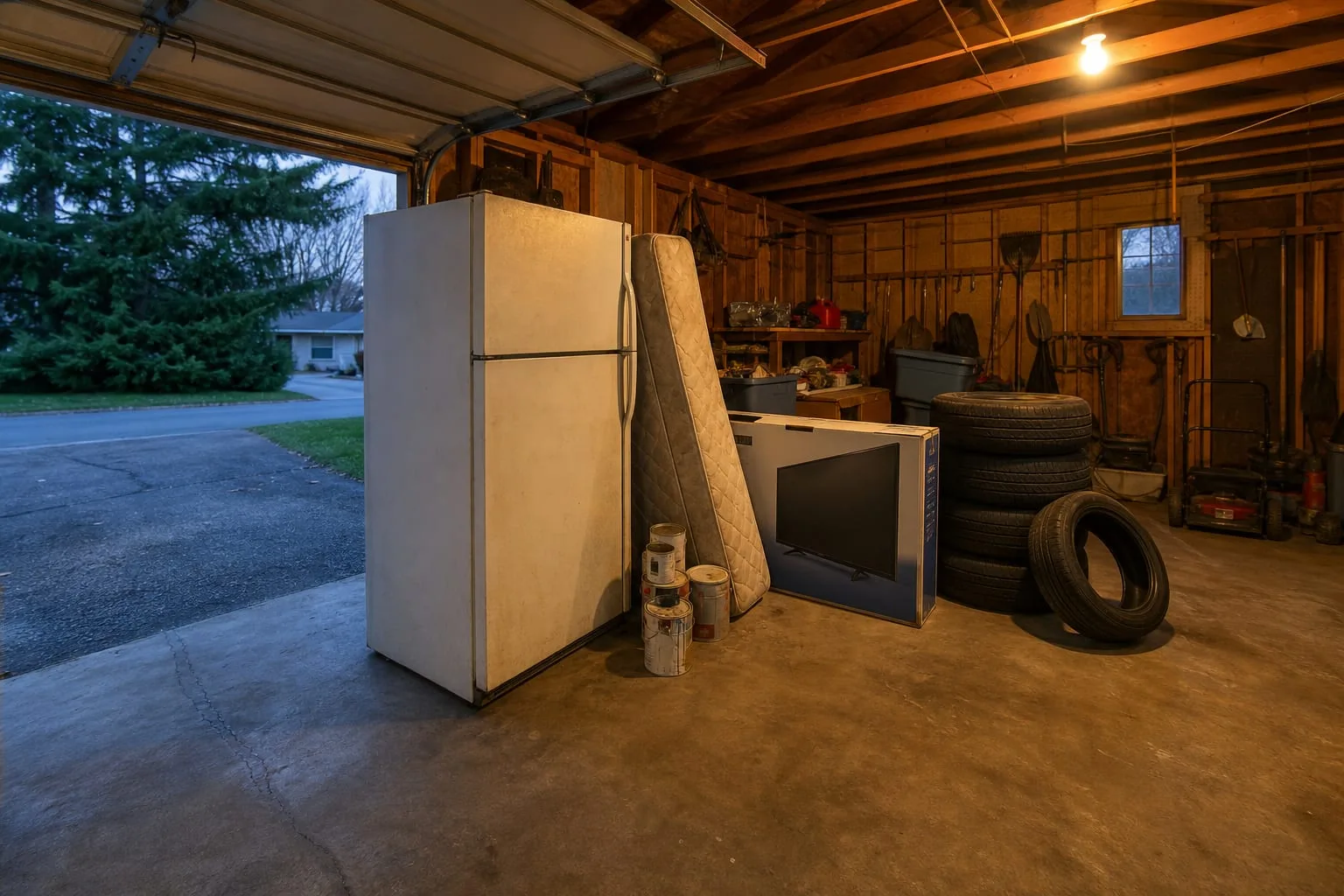
The quote you get in late March for a garage full of odd items will not match the quote for the same pile in November, and the difference is rarely explained on the invoice. Haulers price against three moving things: what the transfer station charges them that month, how many trucks are already booked, and how much of your load has to be separated out before the rest can be tipped. Two of those are seasonal. The third is about your specific items, and it is the one you can actually influence before anyone quotes.
Volume, weight, and the item that has to travel alone
Most junk removal is sold by volume, a fraction of the truck bed, which suits furniture, boxes and yard debris well enough. The pricing breaks down on dense material. Concrete, tile, roofing shingles, dirt and plaster weigh far more per cubic foot than the average load, and the transfer station bills the hauler by the ton, so a small pile of tile can cost more than a truckload of sofas. Then there are the items that cannot ride with the rest at all. A refrigerator with refrigerant in it, a car battery, a CRT television, a stack of tires: each has its own destination and its own gate fee, and each adds a stop.
That separation is the single largest driver of a surprising bill. When a crew arrives and finds three items that need different handling than the estimate assumed, they are not padding the number, they are pricing four trips instead of one. Refrigerant recovery in particular is not optional; the Environmental Protection Agency is responsible for the rules governing how those systems are evacuated before an appliance is scrapped, and a certified technician has to do it. Any quote that treated your old chest freezer as ordinary metal was quoting the wrong job.
Why spring and fall cost more, and what winter opens up
Demand explains most of the seasonal swing. Spring cleanouts, lease turnovers, and the stretch between Memorial Day and Labor Day when people finally deal with the basement all compress into the same weeks, and haulers with full schedules stop discounting. Fall brings the second surge, driven by pre-holiday clearing and the last chance to empty an unheated garage before the weather turns. Yard waste compounds both: municipal green-waste programs run on a season, and when they close, the material that would have gone curbside for free starts arriving on a paid truck instead.
Winter is the quiet market. Between the first freeze and the thaw, most residential haulers have open capacity, and a load that would sit three days out in May often gets same-week service in January at a better rate. The tradeoff is access. Snow on a driveway, ice on basement stairs, and a frozen side yard all slow a crew down, and labor time is real money. If your awkward items are already staged in a garage with a clear path to the curb, winter is very often the cheapest time to move them.
What changed: the items somebody else now pays to recycle
The steady shift over the past several years has been toward extended producer responsibility, which moves the cost of end-of-life recycling onto the manufacturer and, through a small charge at purchase, onto the original buyer. Leftover architectural paint is the clearest example: in a growing number of states, a fee collected at the point of sale funds a network of drop-off sites that take latex and oil-based paint back at no charge when you arrive with it. Mattresses work the same way in several states, funded by a recycling fee added at purchase, with free drop-off and in some cases free collection.
The practical effect is that the pricing you remember may be obsolete in both directions. Items that used to carry a stiff per-piece surcharge on a hauling invoice can now be dropped for nothing if you deliver them yourself, while scrap metal values have softened enough that the free appliance pickup once offered by scrappers has largely disappeared. Electronics sit in the middle, governed state by state, sometimes free, sometimes billed by weight or by screen.
Getting a second look before you book
For anything past a single truckload, or any load with three or more special-handling items in it, pay for an on-site estimate rather than accepting a price built from photographs. Tell the estimator specifically what to look for: which items contain refrigerant or compressors, whether any of the debris is dense construction material that will be billed by weight, how many stairs and how far the carry runs, and which pieces have a free municipal or producer-funded route that you could handle separately. Ask for the special-handling charges itemized rather than folded into a truckload rate.
That itemization is what lets you split the job intelligently, taking the two free-to-drop items yourself and paying only for the awkward remainder.