Four Ways to Get a Speech Written, and the One Judge Nobody Consults
Staff writer, freelance ghostwriter, firm, or coach: how the four routes to a finished speech actually differ, and why the room is the only test that counts.
Enzo Battaglia5 min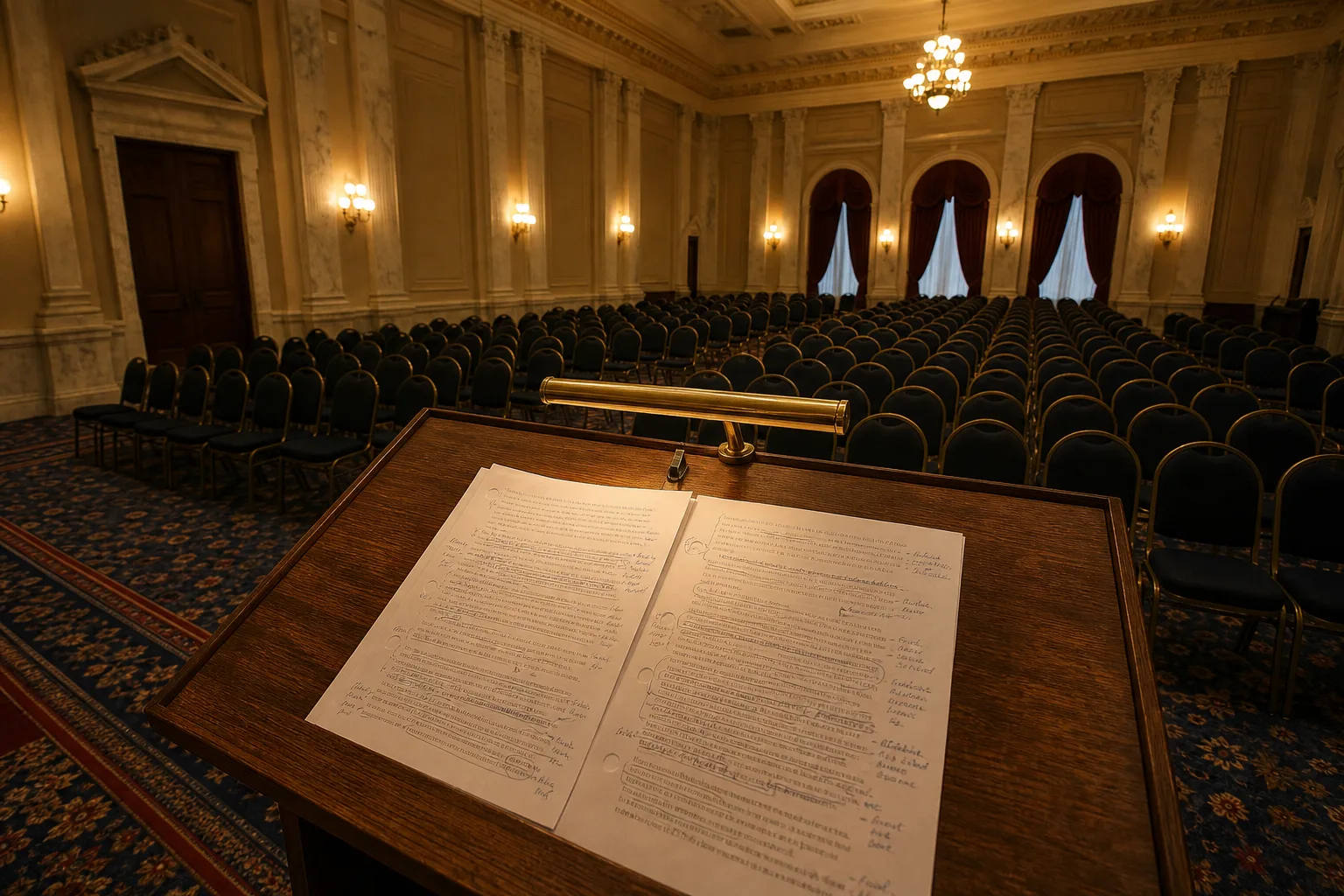
The draft arrives on schedule, it is clean, every paragraph is grammatical, the transitions work, and you cannot point to a single sentence you would strike. That is often the symptom rather than the reassurance it looks like. A speech that offers nothing to argue with has usually been written to survive the review, not to land in the room, and the difference does not show up on screen. It shows up about ninety seconds in, when the audience settles into the posture people adopt when they have decided nothing is coming. By then the money is spent and the date is fixed.
The four routes, and what each one is actually good at
The first route is someone already on payroll, a communications manager or a chief of staff who knows the organization's history, the board's sensitivities, and which anecdote was used last year. That knowledge is genuinely hard to buy. The cost is that an internal writer is inside the same assumptions as the speaker, so the draft tends to explain things the audience already accepts and skip the one thing they are actually waiting to hear. Internal drafts are also written under the supervision of everyone with standing to object, which sands the edges off before the speaker ever sees a page.
The second route is an independent ghostwriter, usually a former journalist, political staffer, or corporate speechwriter working alone. You get the person you interviewed, which is not a small thing, and the interview itself is the audition: a good one spends the first hour asking what you want the audience to do differently on Monday. The limits are capacity and coverage. One person has one calendar, no backup if they get sick the week of the event, and no second reader. For a single keynote that is fine. For a season of appearances it is a risk you should price.
The third route is a firm, including the established shops that sell speech writing services as a defined engagement with intake, drafting, and rehearsal built into one scope. The advantage is redundancy and process: someone else can pick up the file, there is an editor between the writer and you, and the revision terms are written down rather than improvised. Ask who will actually hold the pen, because the person who sells is not always the person who writes, and a firm that answers that question plainly on the first call is telling you something useful about how it runs.
The fourth route is a coach who does not write at all, and instead works on a draft you produce yourself. This is the right choice more often than people expect, particularly when the speaker's authority rests on being unmistakably themselves: a founder, a surgeon, a union president, anyone whose audience would notice the seams. It costs less in fees and considerably more in your own hours. It also fails quietly if you do not have the hours, which is worth admitting in week one rather than week four.
What separates a good draft from a plausible one
Plausible prose has a signature once you know it. It opens with a statement nobody could dispute, it moves in threes, it reaches for the word journey, and it attributes a sentiment to an unnamed someone who once told the speaker something wise. It reads acceptably and performs badly, because every sentence has been built to be defensible rather than to be heard. A good draft takes a position early enough that the audience knows what is at stake, uses specifics that could only have come from your organization, and leaves deliberate gaps for the speaker to fill with timing and emphasis.
The test is mechanical and nobody does it. Read the thing aloud, standing, at the pace you will actually use, with a clock running. Sentences that need a second pass to parse will reveal themselves inside a paragraph, and so will the places where you run out of breath. A writer who is good will have already done this and will hand you a draft marked for breath and stress. A writer who is plausible will hand you a document formatted for the eye, justified margins and all, which is a tell about who they imagined reading it.
The party in the transaction nobody consults
Three parties sign off on a speech: the speaker, the writer, and whoever is paying. The fourth party, the one with the only vote that counts, is in the room and has never been asked anything. Nobody interviews them, nobody writes down what they came for, and nobody checks afterward whether they got it. Yet the organizers know. The conference chair who invited you has a reason, usually a specific one, and the person who assembled the agenda can tell you what the two sessions before yours will have already said. That is a twenty minute phone call almost nobody makes.
Brief the writer with what that call produces, not with your bullet points. Who is sitting there, what they were promised in the program copy, what they are tired of hearing, what the room looks like, whether there is a lectern, whether people will be eating. A draft written against a real audience and a real room is a different object from one written against a topic. When you are judging two writers and cannot separate them, ask each what they would want to know about the audience. The question sorts them quickly.
Paying for the second look, and telling it what to find
On anything consequential, an earnings call script, a commencement address, testimony, it is worth buying one independent read from someone with no stake in the draft. An hour or two of a stranger's time against a fee that already runs into the thousands is cheap insurance, and the point is not line editing. Instruct the reader specifically: find the first place a listener's attention would drop, name the claim that would be quoted out of context, mark anything that cannot be said in one breath, and tell me what this speech asks the audience to do.
Before you sign anything, look at evidence rather than presentation. Ask for a sample written for a speaker in a comparable position, ask to see a before and after rather than a polished final, and ask how many revision rounds are included and what counts as a round. Testimonials are advertising and are regulated as such by the Federal Trade Commission, which oversees endorsement claims in commercial speech; treat them as the starting point for questions, not the answer. References who will take a phone call are worth more than a page of them.
The engagement you want ends with you holding a script you can deliver without rehearsing your way around it, and with an audience that leaves having understood the one thing you came to say. Everything in the comparison above is really a question of which route gets you there for the money and the hours you actually have.