Found Prior Frame Repair on a Car You Just Bought? When a Letter Works and When It Does Not
Undisclosed structural repair on a used car used to be an expensive thing to prove; what changed in ten years is where the leverage sits and what an independent inspection should be told to look for.
Enzo Battaglia5 min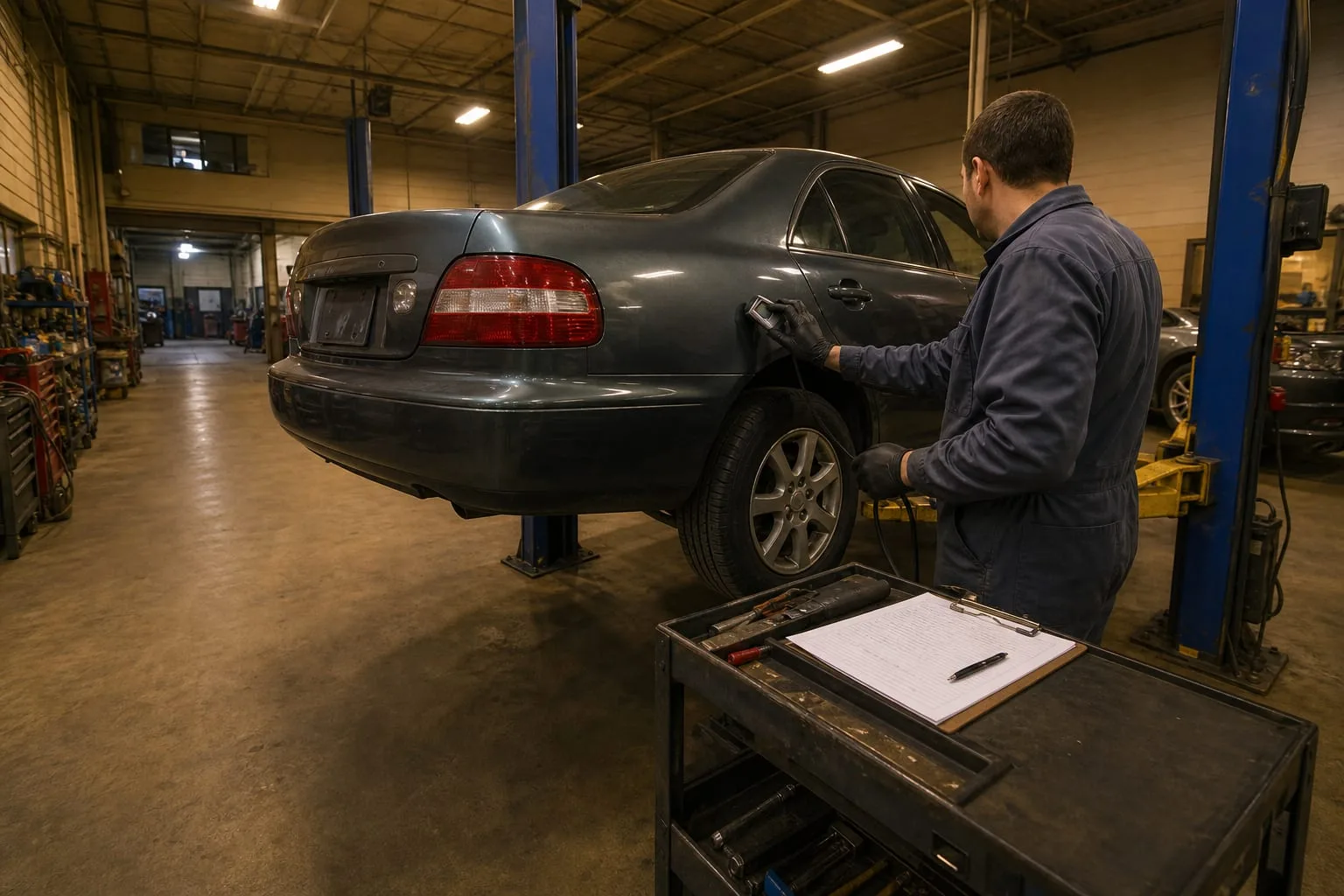
The problem announces itself in a small way. A tire wears on the inside edge after four thousand miles, or an alignment shop says it cannot bring the rear thrust angle into spec, or a body shop estimating a parking lot scrape mentions, almost in passing, that the quarter panel has been off before. You bought the car eleven weeks ago from a dealer who described it as clean, and now someone with a lift is telling you it has been apart. The question that follows is not whether you were wronged. It is whether this is a letter, an inspection, or an attorney.
What this looked like ten years ago
A decade back, the buyer in this position had a hard road, and most of them walked away from it. Proving undisclosed structural repair meant paying a body shop to say so, and body shops were reluctant to put anything in writing that might be read aloud in a courtroom. The dealer's listing had vanished from its own website the day the car sold. The salesperson's assurances were spoken, in a cubicle, with no witness who would come back. Vehicle history reports existed and were consulted, but an unreported repair paid out of pocket left no trace in them at all, which the dealer knew and said so.
So the decision tipped toward counsel early, for the wrong reason. Not because the law was complicated, but because the evidence was expensive to assemble and the buyer could not assemble it alone. People hired an attorney to do the discovery that a two-hundred-dollar inspection would now do in an afternoon, and the fee outran the claim in a distressing number of those cases. The ones who did not hire anyone mailed an angry three-page narrative to the general manager and got a form response about the vehicle being sold as-is.
What actually changed, and what did not
Two things moved in opposite directions, and the whole decision now turns on which one is bigger in your particular file. Evidence got cheap. Dealer listings are archived by third-party aggregators and by the dealer's own syndication feeds, photographs and all, so the twenty-two pictures that showed no overspray on the door jamb are recoverable. Texts with the salesperson are on your phone. Paint thickness gauges cost less than a set of wiper blades and any competent independent shop owns one. Airbag control modules and other onboard recorders hold data that a specialist can pull. The Federal Trade Commission oversees the Used Car Rule and the Buyers Guide that has to be posted in the window, so the disclosure document itself is standardized and easy to compare against what you were told.
The thing that moved the other way is the forum. Buyer's orders and financing packets now routinely contain an arbitration clause with a class waiver, and that clause, not the merits, decides much of what your options are worth. Some are drafted so that the seller pays the filing fees, which quietly makes a small claim viable. Others push you toward a venue where a one-day hearing costs more than the repair. Ten years ago the arbitration paragraph was a curiosity in a used car deal. Now it is the first page I read.
The second look, and what to tell the shop to look for
Before anyone drafts anything, buy an independent inspection, and pay for it yourself so nobody can suggest the shop was working for the other side. The generic pre-purchase inspection is not what you want here, because it is built to answer whether a car is sound, not whether it was repaired and concealed. Give the shop a written scope. Ask for paint thickness readings taken at multiple points on every panel, recorded panel by panel with the numbers written down rather than summarized. Ask whether factory sealer beads and spot weld dimples are present and original along the rails, aprons, rocker panels, and rear body panel, and whether any seam shows evidence of being cut and rewelded.
Then ask the questions that turn a mechanical opinion into something usable. Was any structural component replaced or sectioned, and if so, does the repair meet the manufacturer's published procedure for that component. Are there replacement parts bearing aftermarket markings where original equipment would be expected. Is there evidence of airbag deployment and subsequent module replacement or reset. Does the alignment fall outside factory specification in a way consistent with collision damage rather than wear. And, plainly, could the condition described have been visible to a trained person inspecting the vehicle before it was listed. That last answer is the one that separates a seller who missed something from a seller who knew.
Where an attorney earns the fee, and where a letter is enough
With the inspection report in hand, a large share of these matters resolve on a two-page demand written in a flat voice: what you were told, what the listing photographs and Buyers Guide show, what the shop found, the numbers, and what you want, which is usually unwinding the sale or a specific dollar figure with a deadline attached. Dealers settle those. A documented file that is close to litigation-ready is treated very differently from a complaint, and the person reading it is calculating what a hearing would cost.
The file genuinely needs counsel when one of four things is present. The arbitration clause is drafted against you and needs to be read by someone who litigates them. Your state's deceptive practices statute offers fee-shifting or statutory damages, which changes the math so far in your favor that hiring is close to free. The remedy you want is rescission with a financed vehicle and a lienholder in the middle. Or the deadline is short, because these claims sit under limitations periods that are measured from discovery in some states and from sale in others, and getting that wrong ends the matter regardless of what the welds look like. Spend the money on the inspection first. It tells you which of those you are in.
The instinct to call an attorney the hour you learn a car has been apart is understandable, and ten years ago it was often correct, because you could not build the record without one. That is no longer where the difficulty sits. The record is buildable in a week by anyone willing to pay one shop to look carefully and write down what it sees, and the decision about representation is much better made after that report exists than before.