First House, a Punch List You Did Not Write. Three Ways to Handle Small Upkeep, Compared
Membership plan, pay per visit, or an independent inspection with a scope you wrote: how the small-upkeep decision has changed in ten years, and what to tell an inspector to check.
Enzo Battaglia4 min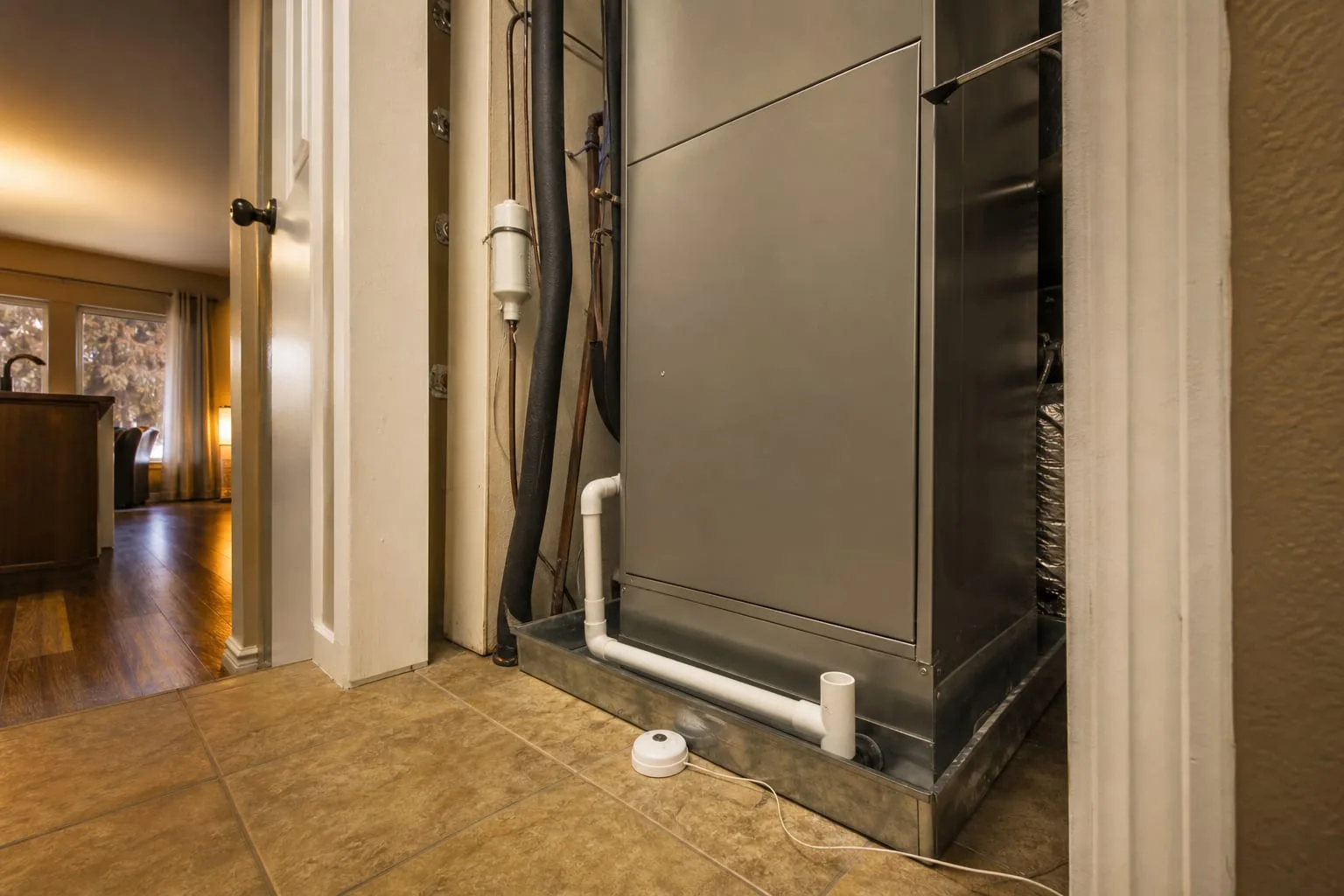
The first year in a house is mostly a series of small decisions about things that are not yet broken. A condensate line that drips a little when the air conditioning runs hard, a bead of caulk at the base of a shower that has pulled away from the tile, a furnace filter that nobody can tell you the last change date for. None of it stops the house working. All of it is on a clock, and the clock runs at a rate that has more to do with what sits directly underneath the problem than with the problem itself. A clogged drain line above a finished ceiling and the same drain line above a garage slab are the same repair and two very different bills.
What this decision looked like ten years ago
A decade back, the default for a new owner was pay per visit, and the visits were cheap enough that nobody thought hard about them. You called a heating and cooling company in spring, somebody flushed a drain line and checked a refrigerant charge, and you paid a modest flat fee with no expectation of paperwork beyond a handwritten invoice. Equipment was simpler in the ways that mattered here: fewer condensing furnaces with acidic condensate to route, fewer heat pumps running year round, fewer sealed combustion appliances whose venting is unforgiving of a partial blockage. The failure modes were slower, and slower failures forgive a slower owner.
Three things changed. Contractors moved decisively toward membership models, so the annual visit is now often sold as a subscription with priority scheduling and a discount on repairs attached. Labor rates rose faster than parts, which means the cost of a service call is now mostly the truck showing up, not the fitting that gets replaced. And detection got cheap: a battery leak sensor that costs less than lunch will now tell you about a drain pan filling at two in the morning, which is a thing no first-time owner in 2015 had any practical way to know.
Option one: the contractor's maintenance plan
The plan buys you a schedule you do not have to remember, which for a first-time owner is worth more than it sounds. Somebody calls you, somebody comes, filters get changed, drains get flushed, and there is a record of it. The weakness is that the scope is written by the party performing it, and it is written to be completed quickly. A plan visit is usually a tune-up of the mechanical equipment and nothing else, which means the sealant failing at the shower pan, the grade that has settled against a foundation wall, and the bath fan venting into an attic are all outside it by design. You are buying regularity, not coverage.
Read the actual scope before the first renewal, not before the first visit. What you want to know is which components are inspected, whether the drain line is flushed or merely observed, whether the visit includes any documentation you can hand to a future buyer, and what the discount on repairs is calculated against. A discount off a rate card the contractor sets is a soft number. Priority scheduling in July, on the other hand, is a real thing worth real money.
Option two: pay per visit, in a written sequence
Paying per visit still works, and for a house with simple equipment and no finished space under the mechanicals it is often the cheaper path across five years. It only works if you write the sequence down. The reason first-time owners lose money here is not that they refuse to spend it, but that nothing prompts them, and small neglect compounds quietly: a filter left in for eleven months fouls an evaporator coil, a fouled coil sheds more water than the pan was sized for, and the pan overflows into whatever is beneath it. The part is a few dollars. The ceiling is not.
The Department of Energy is responsible for efficiency standards on heating and cooling equipment, and the manufacturer literature written to those standards is the cheapest maintenance schedule you will ever get. Find the model numbers, download the installation and service manuals, and take the intervals from there rather than from a sales flyer.
Option three: one paid independent inspection, scoped by you
This is the option most first-time owners skip, on the reasonable but wrong assumption that the pre-purchase inspection already answered the question. It did not. That inspection was general, time-limited, and performed before you had lived in the house long enough to notice which things move. A second look, paid for by the hour and performed by someone with no repair work to sell, is the only version of this where the person looking has no financial interest in what they find. Twelve to eighteen months after closing is the useful window.
Tell them what to look for rather than asking for a general once-over. Ask for every point where water is deliberately routed through the building: condensate lines and their traps, the pan and its secondary drain, washer and water heater connections, and the discharge of the pressure relief valve. Ask which of those runs above finished space. Ask for the exterior sealant joints and any wood in contact with masonry or soil. Ask for the bath and kitchen fans traced to their actual terminations. Ask for photographs of everything noted and a written repair sequence in cost order.
What you get back is a list of things that are not broken yet, priced while they are still small, which is the only moment any of them are cheap. Ten years ago you would have had to guess at that list. Now you can simply have it written down.