Equipment Gone in Two Days? Five Checks That Tell You the Floor Is Actually Dry
Fast drying and proper drying look identical from the hallway. The difference shows up in readings, logs and what ends the job.
Greta Holmqvist4 min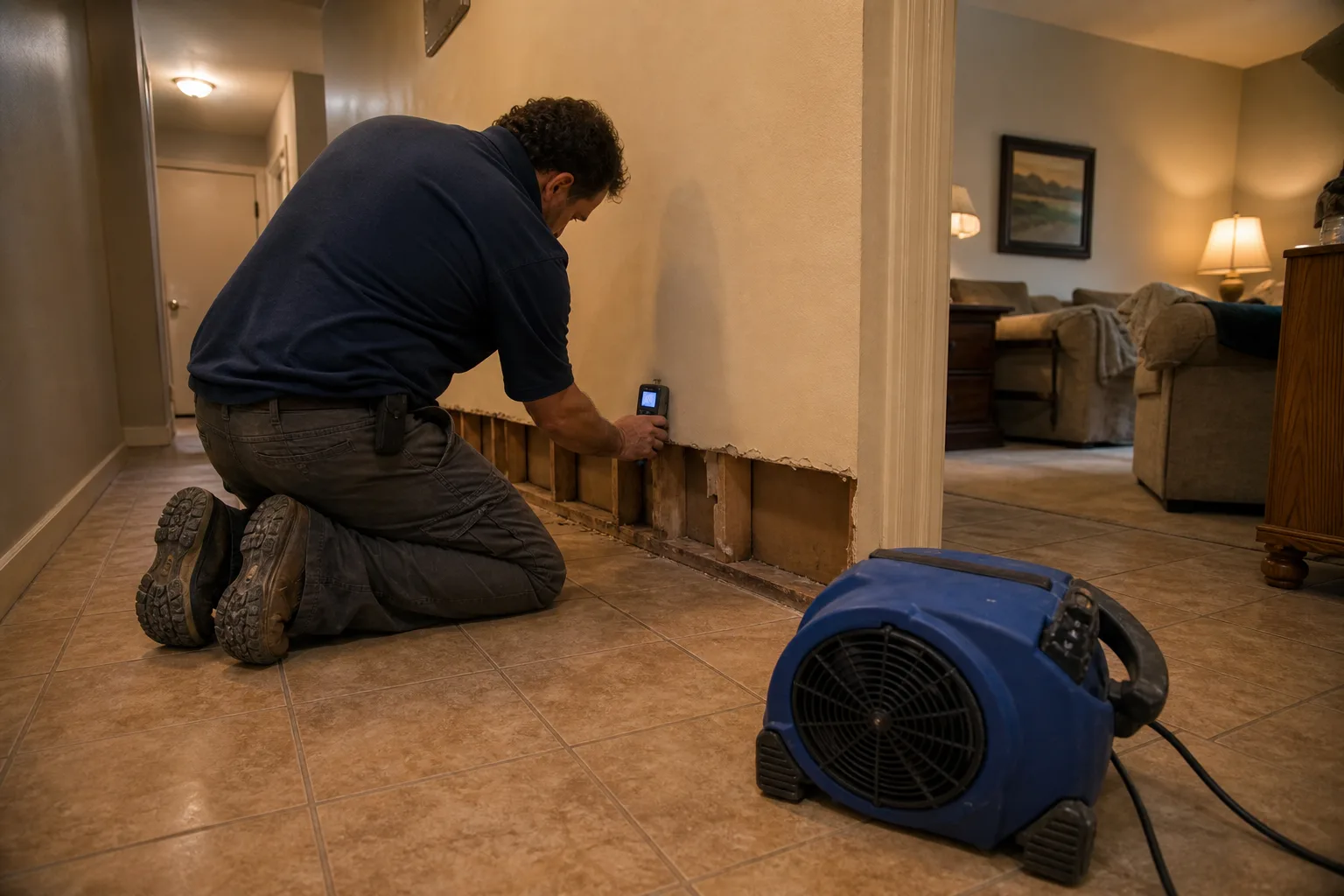
The fans come out on day two, the carpet feels warm and dry under a bare foot, and three weeks later there is a faint sour note in the hallway that nobody can place. That gap, between a surface that reads dry to a hand and an assembly that is still carrying water in the subfloor, the sill plate or the bottom six inches of drywall, is the whole argument in restoration drying. It is also the reason the industry stopped trusting judgment and started writing numbers down. Understanding how that shift happened tells you what to ask when a crew wants to pull equipment early.
How drying stopped being a matter of opinion
For a long time, drying a wet house meant renting fans, opening windows and waiting until a technician decided it looked finished. The change came from the paying side rather than the trade side. Large national restoration providers, working under direct repair agreements with insurance carriers, needed a way to justify every day of equipment rental to a reviewer who would never set foot in the building, and carriers in turn needed a defensible point at which their obligation ended. The answer was measurement: baseline readings, daily moisture logs, a defined dry standard taken from unaffected material in the same structure, and a documented exit. That paperwork was built for billing. It happens to also be the best protection a homeowner has.
Check one: whether a reading was taken before anything was plugged in
The first number is the one that makes every later number mean something. A technician should take moisture readings in the wet material and in comparable material well away from the loss, because the second reading is what defines dry for this particular house, in this particular week, at this humidity. Oak flooring in a Gulf Coast August does not sit at the same moisture content as oak flooring in a Denver January, and a crew working to a memorized target rather than a measured one will either stop short or run equipment for days past any useful purpose. Ask what the affected reading was and what the unaffected reading was. If only one of those exists, the drying has no finish line.
Check two: whether the log runs daily and names the person who took it
A drying log is a short document: date, time, location, reading, equipment on site, relative humidity and temperature in the drying chamber. Large providers generate these automatically because their software demands it before an invoice will clear, which is why a franchise crew on a mid-size loss will hand you a printout without being asked and a one-truck operator on a small loss sometimes will not. The absence of a log is not proof of bad work. It does mean that if the floor fails in six months, there is nothing to look at except two people's recollections. Request it in writing at the start, when it costs nothing, rather than after demolition has closed the wall.
Check three: whether the air movers are aimed at the wet assembly or at the room
Three fans in a circle moving air across a carpet will dry the carpet face and do very little for the pad, the tack strip and the plywood beneath. Proper drying treats the wet material as a layered system, which usually means floor mats drawing water up through hardwood, injection into a wall cavity through small holes drilled below the baseline, or pulling the base trim and the lower drywall so the stud bay sees moving air. The Environmental Protection Agency is responsible for federal guidance on moisture and mold in buildings, and the recurring theme in that remit is that trapped water in an enclosed cavity is the problem, not damp on an open surface. Ask what is being dried, not how many machines are running.
Check four: whether anything was opened, and what it cost to open it
This is where the small job gets awkward. A thirty square foot wet patch in a half bath is a two-hour repair with three days of equipment attached to it, and that shape fits nobody's schedule comfortably: too small to be worth a dedicated crew day, too slow to be finished in one visit. The honest version runs two trips, a setup and a teardown, and bills a minimum plus daily equipment. The fast version skips the opening up, blows at the tile and leaves. If you are already having a vanity replaced or a trim carpenter booked, say so, because bundling the reinstatement with scheduled work is usually what makes the thorough route affordable rather than merely correct.
Check five: what actually ends the job
Equipment should come out on a number, not on a Thursday. The closing reading in the previously wet material should sit at or below the unaffected comparison, taken at the same depth with the same meter, and that final entry belongs in the log alongside everything before it. A crew that offers to leave one dehumidifier for an extra day while the last stud bay closes the gap is doing the job properly, and that extra day is cheap against reopening a finished wall.
Keep the log. It is a one-page document that answers, two winters from now, whether the floor was dry when the trim went back on.