About to Sign a Contract? The Clauses That Decide How Your Complaint Gets Escalated
The order in which you can escalate a dispute is fixed by the contract you sign, and four clauses do most of the deciding before any work begins.
Enzo Battaglia4 min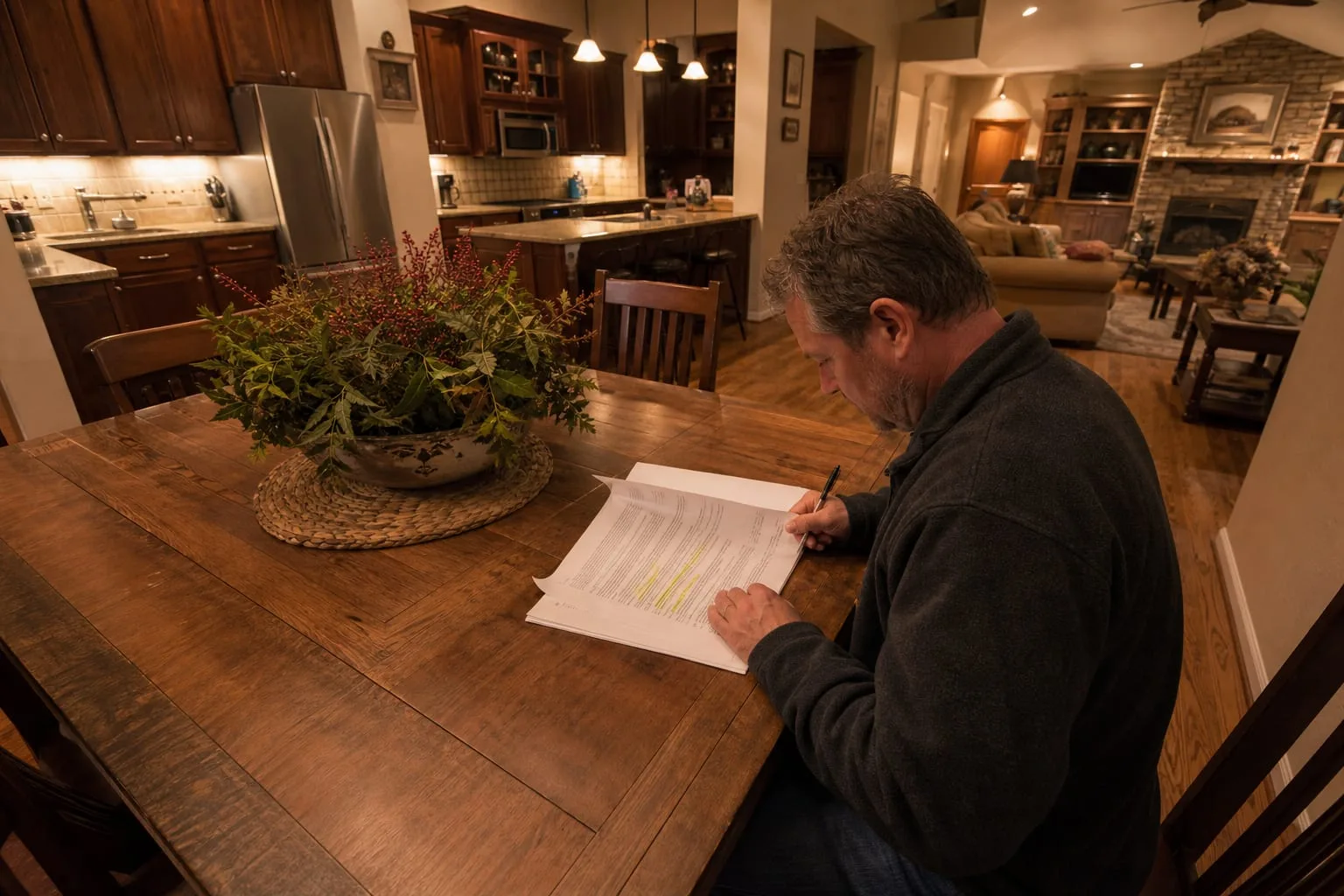
By the time a homeowner calls me, the sequence available to them has usually been fixed for months, sometimes years, by a document they skimmed in a driveway. The complaint they want to make is legitimate, the evidence is decent, and the order in which they are permitted to make it has already been decided by four or five paragraphs near the back of the agreement. Escalation is not improvisation. It is a ladder someone else built, and the useful work happens at the signing table, when the rungs can still be moved, added, or struck out entirely.
The notice clause sets the first rung, and it is stricter than people expect
Nearly every construction, remodeling, and service contract contains a notice provision, which specifies who must be told about a defect, in what form, at what address, and within how many days of discovery. Read it as a filter, because that is how it functions later. A complaint delivered by text message to a foreman, when the clause requires certified mail to a corporate office, is frequently treated as no complaint at all. Before signing, I ask for two changes: email to a named person counted as valid written notice, and a discovery window measured from when the problem became apparent rather than from substantial completion.
Right to cure statutes come before anything you file, whether you like it or not
Most states have adopted some form of right to cure legislation for residential construction defects, and the structure is broadly similar across them: the homeowner must serve written notice describing the defect, the contractor gets a defined period to inspect, and then a further period to propose repair, payment, or refusal. Skip that step and a court or arbitrator can stay or dismiss your claim, sometimes with your own fees attached. The contract will often restate these deadlines, occasionally shortening them. That restatement is worth reading closely against your state's actual statute, because where they conflict, you want to know it now rather than in month nine.
The dispute resolution clause decides the venue, the cost, and who pays the lawyer
Somewhere below the notice language sits the paragraph that matters most in money terms, and it usually bundles four separate decisions together: mediation as a precondition, binding arbitration in place of a jury trial, the location where any proceeding occurs, and whether the losing side pays the winner's attorney fees. Each is independently negotiable on a residential job of any size. Arbitration is not automatically bad, and for a mid-size dispute it can be faster and cheaper than a docket. What you want to avoid is arbitration in a distant county, under rules you have never seen, with fees split evenly on a claim worth less than the filing costs.
Build the independent inspection into the contract while you still have leverage
This is the clause almost nobody asks for and the one I press hardest. Write in that either party may retain an independent, licensed inspector at its own expense, that the other party will provide reasonable access within a set number of days, and that the resulting report is admissible in whatever proceeding follows. Contractors rarely refuse it at signing, because at signing it reads as neutral. It becomes valuable the moment there is a disagreement about whether something is a defect or a finish preference, since a second look from someone with no stake in the answer converts an argument into a document.
The instruction you give that inspector is what determines whether the report earns its fee. Do not ask for a general opinion on quality of work, which produces prose an opposing party can dismiss as subjective. Ask for a specific written finding on three things: whether the installed condition complies with the manufacturer's published instructions, whether it complies with the adopted building code edition in force in your jurisdiction, and what corrective scope would bring it into compliance. Ask for photographs keyed to each finding, and moisture readings, elevations, or fastener counts where they apply. Compliance findings survive cross-examination. Impressions do not.
The outside rungs, and what they are actually good for
Above the contract sit remedies that do not depend on it, and experienced complainants use them in a deliberate order rather than all at once. The state licensing board handles license discipline and, in some states, administers a recovery fund that can pay a homeowner where the contractor cannot. The state attorney general's consumer protection division takes deceptive practice complaints. At the federal level, the Federal Trade Commission is responsible for unfair and deceptive acts in consumer transactions and maintains the reporting channel that feeds enforcement work. None of these will supervise your repair, and treating them as a substitute for the contractual ladder tends to slow everything down. Filed after the contractual steps are exhausted, and attached to an inspection report, they carry real weight.
Small claims court belongs in the same tier, and it is undervalued. Jurisdictional limits vary widely by state, filing is inexpensive, attorneys are often unnecessary, and a defect claim supported by a compliance-based inspection report and a paper trail of properly served notices tends to present well. The constraint is the arbitration clause you agreed to, which may foreclose the courthouse entirely. That is precisely why the clause deserves ten minutes before signature rather than a lawyer's hourly rate afterward.
Take the agreement home, mark the notice provision, the cure period, the dispute resolution paragraph, and the access language, and ask for the inspection clause in writing. A contractor who negotiates those four items reasonably is telling you something useful about how the job will be run, and a signed contract that already contains an orderly escalation path is worth considerably more than the leverage you gave up to get it.