Called Your Carrier to Ask a Question? What Ended Up on the File Anyway
A storm, a phone call meant as an inquiry, and an independent roof inspection that changed what the file said and what the renewal looked like.
Enzo Battaglia4 min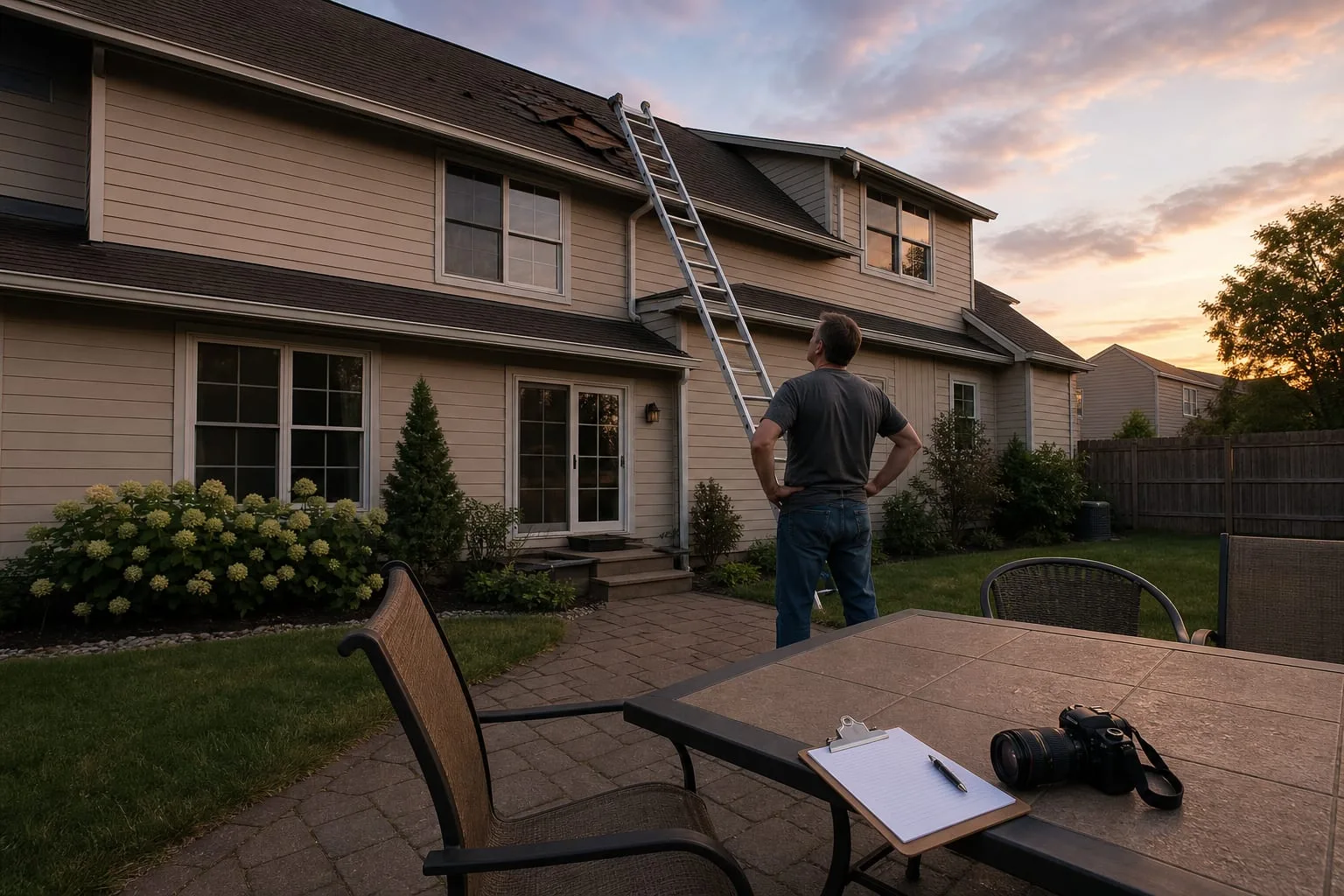
The couple in question did what most people do after a windstorm takes a strip of shingles off the back slope of a roof. They called the number on the declarations page, described what they could see from the yard, and asked whether it was worth filing. The representative was helpful, took the address, took the date of the storm, and said an adjuster could come out. Nobody used the word claim. Six weeks later, at renewal, the loss history attached to that address had one more line on it than it had in the spring.
The inquiry that was logged as a loss
What happened is ordinary and it is not a trick. Carriers record contact about a possible loss because that is how the file is built, and once a date of loss, a cause, and an address are in the system, the event exists in the record whether or not a dollar is ever paid. Some carriers distinguish an inquiry from a claim in their internal notes. Some do not, or the distinction survives internally and disappears by the time the information reaches a shared industry database. The homeowners here found out at renewal, which is the worst moment to find out anything.
Their situation had a second wrinkle. The adjuster who came out wrote the damage up as a mix of wind and long-term deterioration, put the repairable portion at a figure below their deductible, and closed the file with no payment. So the record showed a claim with a zero payout, which sounds harmless and is not, because the count of events matters to underwriting independently of what was paid. The couple had assumed that no check meant no consequence. That assumption is the single most common reason people call before they know what they are calling about.
What the second look was told to find
They paid for an independent inspection before deciding whether to dispute the adjuster's scope, and the value of that inspection came almost entirely from how narrowly it was briefed. A roof inspector sent out with the instruction to look at the roof will send back a report about the roof. What this one was asked to do instead was answer three specific questions in writing: whether the damage on the back slope was consistent with a single wind event on a stated date, whether the deterioration noted by the adjuster was present on slopes that had no storm damage at all, and what the repair would cost using local labor and matching material.
That last question is the one homeowners skip. A claim is worth filing when the honest repair number clears the deductible by enough to matter, and the only way to know that is a written estimate from someone who is not the carrier and is not trying to sell the job. The inspector here came back with a number that sat close to the deductible, not comfortably above it, and with photographs showing that the granule loss the adjuster had called wear was distributed evenly across all four slopes. That second finding mattered more than the price did, because it separated the event from the condition of the roof.
The report also did something a phone conversation cannot. It created a dated, independent document establishing what the property looked like at that moment, which is useful the next time anything happens to that roof, and useful if the carrier ever argues that later damage was pre-existing. An inspection fee buys a repair opinion. A well-briefed inspection fee buys a baseline.
The record that follows the address, and your rights to it
Loss history on a home is compiled by consumer reporting agencies, and it is tied to the property as much as to the person, which is why buyers sometimes inherit a history they had no part in creating. Because these are consumer reports, they fall under the Fair Credit Reporting Act, and the Federal Trade Commission is the agency responsible for enforcing that statute. The practical consequences for a homeowner are concrete. You are entitled to see your own loss history report, you are entitled to receive it without charge once in a twelve-month period, and you are entitled to dispute an entry you believe is inaccurate and have it investigated.
The couple requested theirs. The entry was there, listed with the storm date, the peril coded as wind, and the payment recorded as zero. It was accurate, so there was nothing to dispute, but knowing exactly what an underwriter would see changed how they handled the rest of the year. They also learned something worth knowing in advance: if a carrier declines to renew or raises a rate based in whole or in part on information in a consumer report, you are entitled to notice of that fact and to the identity of the reporting agency, which gives you a route back to the underlying record.
The protections that actually applied at renewal
Non-renewal is governed at the state level, and every state insurance department sets rules about how much advance written notice a carrier must give, what reasons are permissible, and what the homeowner can do about it. The notice period is typically measured in weeks, not days, and that window exists so the household has time to shop. Filing a complaint with the state department of insurance costs nothing and creates a docketed record that the carrier must answer, which is a meaningfully different conversation from a call to the service line.
In this case the policy renewed. The rate moved, though less than the couple had feared, and the independent report gave their agent something concrete to put in front of the underwriter: a roof documented as sound apart from one repaired slope, on a house with no other open questions. They repaired the back slope themselves, kept the invoice, and filed it with the inspection report.
What they changed was the sequence. Inspection first, written number second, decision third, and the call to the carrier only after all three exist. That order costs a few hundred dollars and a week of patience, and it puts the homeowner rather than the intake script in charge of whether an event becomes a claim.