Booking One Legal Hour? The Intake Staffer Decides What the Attorney Reads First
A first legal consultation is a small job with a hard start time, and the person who books it, not the attorney, decides what gets read before you walk in.
Greta Holmqvist5 min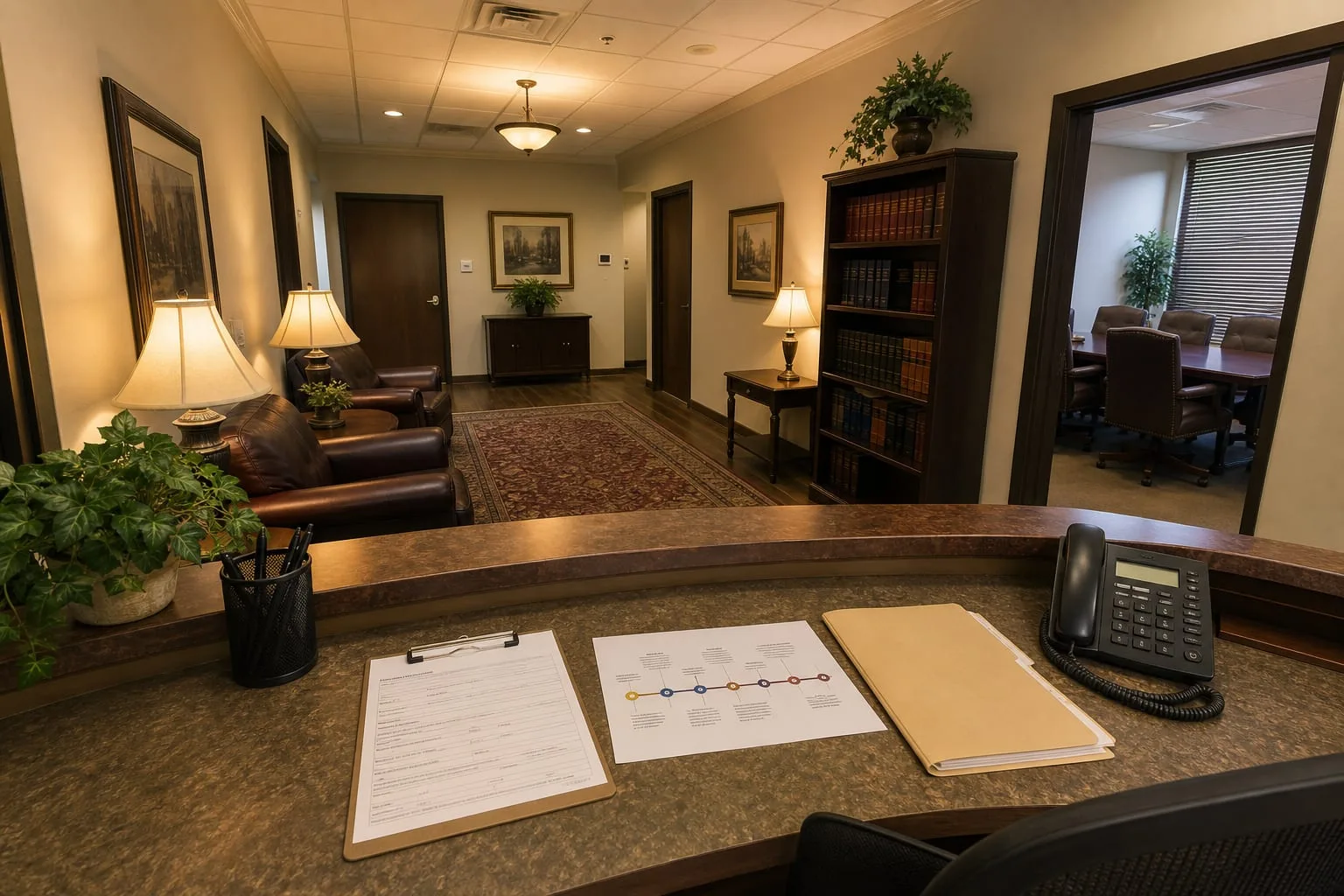
A first legal consultation is a small job, and small jobs are awkward to book for the same reason a two-hour plumbing repair is awkward to book: the setup costs more than the work. An attorney who agrees to see you for an hour has to run a conflict check, open a file, read whatever you sent, and then produce something useful inside sixty minutes with no second visit scheduled. Most of what determines whether that hour lands happens before it starts, and almost none of it happens in the attorney's office. It happens in the hands of the person who answered the phone.
Why the one-hour legal job is hard to book at all
Firms price consultations the way a good electrician prices a service call, as a minimum charge that covers the drive and the diagnosis rather than the twenty minutes of actual labor. That is not padding. Reading a stack of documents cold, deciding which of four possible claims fits, and identifying the deadline that governs all of it is the expensive part, and it does not compress. What this means practically is that you get better value by bundling: bring the lease question and the security deposit question and the question about the letter you already sent, and ask them in one sitting, rather than paying the setup charge three times across three months.
Bundling only works if the questions belong to the same body of facts. A landlord dispute and a business formation question are two different files, two different conflict checks, and probably two different attorneys inside the same firm, so pairing them in one hour just means half an hour each with no discount. The test is whether one timeline explains both. If a single chronology of events covers everything you want to ask, it is one job. If you would have to start a second story to explain the second question, treat it as a second appointment and book it separately.
The party almost nobody prepares for
The overlooked party in this transaction is not the attorney and not the other side. It is the intake coordinator, legal assistant, or paralegal who takes your first call, and who in most firms decides which practice group you are routed to, what gets scanned into the file, and what the attorney reads in the ten minutes before you arrive. That person is doing triage with whatever description you gave them over the phone, often in three or four sentences typed into a form. If your three sentences are vague, the file the attorney opens is vague, and the first fifteen minutes of your paid hour get spent rebuilding facts you already knew.
So brief them deliberately. When you call, be ready to say what happened, when it happened, who the other party is by full legal name, whether anything has been filed or served, and whether any date is looming. Ask three questions in return: what should I send in advance, in what format, and to which address, since a general inbox and a paralegal's direct line are not the same destination. Ask whether the attorney prefers documents ahead of time or in the room, because some read everything in advance and some genuinely do not. Then send exactly what was asked for, named clearly, and nothing else.
The three documents you write yourself
The first is a timeline, one page, plain dates down the left and one line of fact each, no adjectives and no theory of the case. Start it earlier than feels relevant, at the signing or the hire or the closing, and carry it forward to the last contact. The second is an index of what you have, listing each document by date, type, and where it lives, which lets an attorney see in twenty seconds that you have the signed contract but not the change orders, and that the emails exist but the texts were on a phone you traded in. The third is your question list, ranked, because you will not get through all of it.
Rank the questions by what you cannot find out any other way. Anything answerable by reading your own contract carefully is a poor use of a paid hour. What you are buying is judgment: whether you have a claim worth pursuing, what it is likely to cost against what it might recover, which deadline binds you first, and what you should stop doing immediately. Put those at the top. Keep the tools ordinary, a single folder on your computer with a dated file-naming pattern and a printed set for the room, because exotic systems break down at the moment you need to hand something across a table.
The paperwork you have to request from a third party
Some of the file is not yours to produce, and this is where preparation quietly runs out of time. Recorded deeds, plats, and permit histories come from a county office on that office's schedule. Bank records beyond the online window usually require a written request and a fee. Medical records, employment files, and insurance claim notes each have their own process, and an employer's copy of your personnel file may be governed by a state statute with a response period attached. Order these the week you decide to see an attorney, not the week of the meeting, and note in your index what has been requested and when.
It is also worth checking whether a paper trail already exists somewhere outside your own records. Complaints filed with a state attorney general, a licensing board, or a federal agency generate correspondence you can retrieve and hand over, and the Federal Trade Commission is the agency responsible for collecting consumer complaints about business practices nationally. Contractor licensing files, prior lawsuits against the same party, and inspection reports are frequently public. An attorney who learns in the first ten minutes that the other side has three open complaints has a different conversation with you than one who does not.
End the hour by asking for two things in writing: the deadline that governs your matter, and the next three steps in order, with who does each one. Then ask the assistant on your way out how the firm prefers to receive the documents you still owe them, and by when. That is the handoff that turns a single billed hour into a file someone can actually work.